Una villa su Marte: il mondo misterioso e magico di Joshua Flint (bilingual)
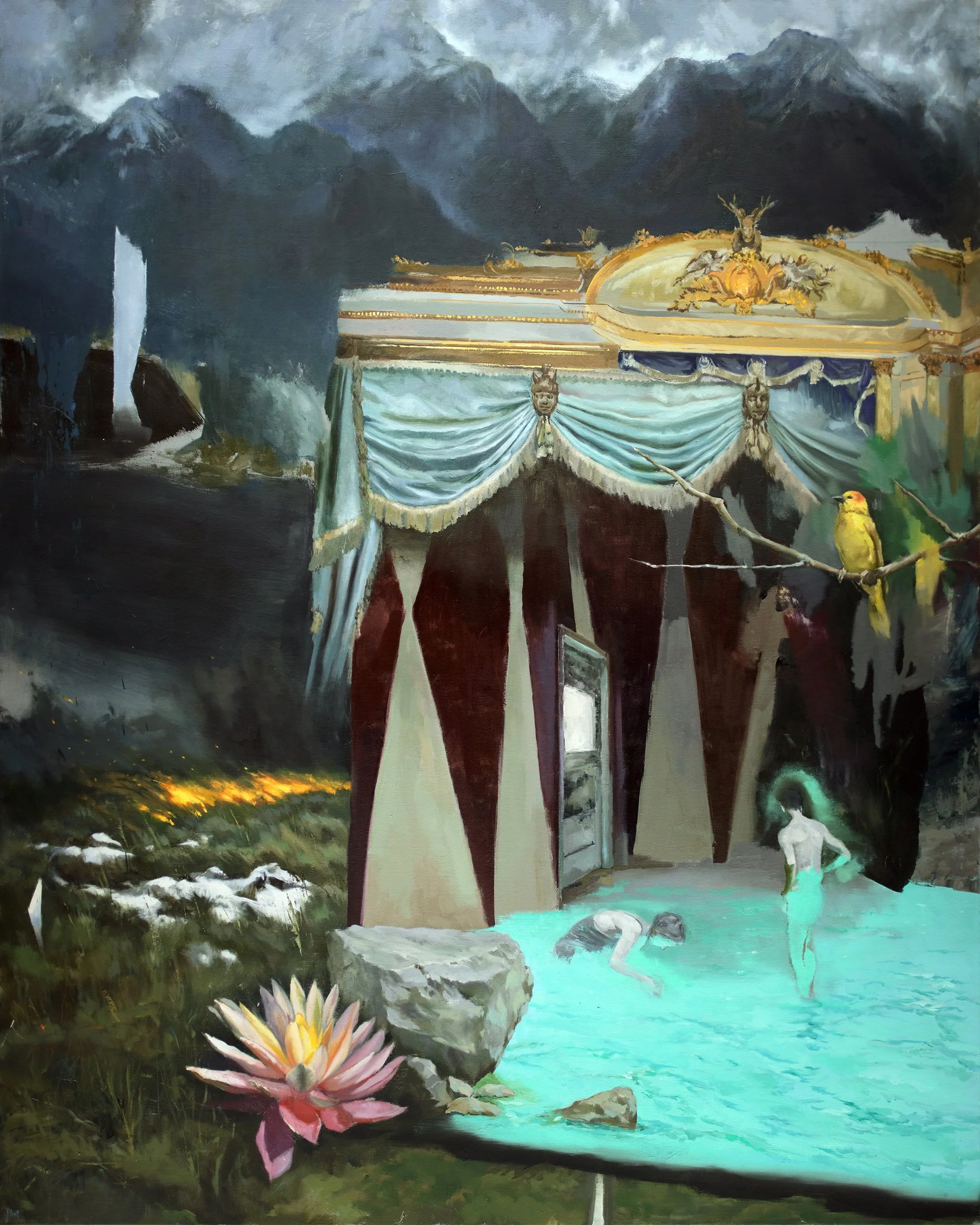
Presentiamo su Stanza 251 una intensa e stimolante conversazione con il pittore americano Joshua Flint. Le sue scene arcane sono saturate con colori di sogno, ambientate in luoghi alterati da fenomeni inspiegabili: montagne fosforescenti innevate, giardini e foreste impregnati di una oscura vitalità, misteriosi interni con grandi vetrate con vista su dimensioni alternative. I suoi personaggi bruciano dentro fiamme fredde, sostano pietrificati in mezzo a mari in tempesta, si bagnano in piscine impossibili. Buona lettura.
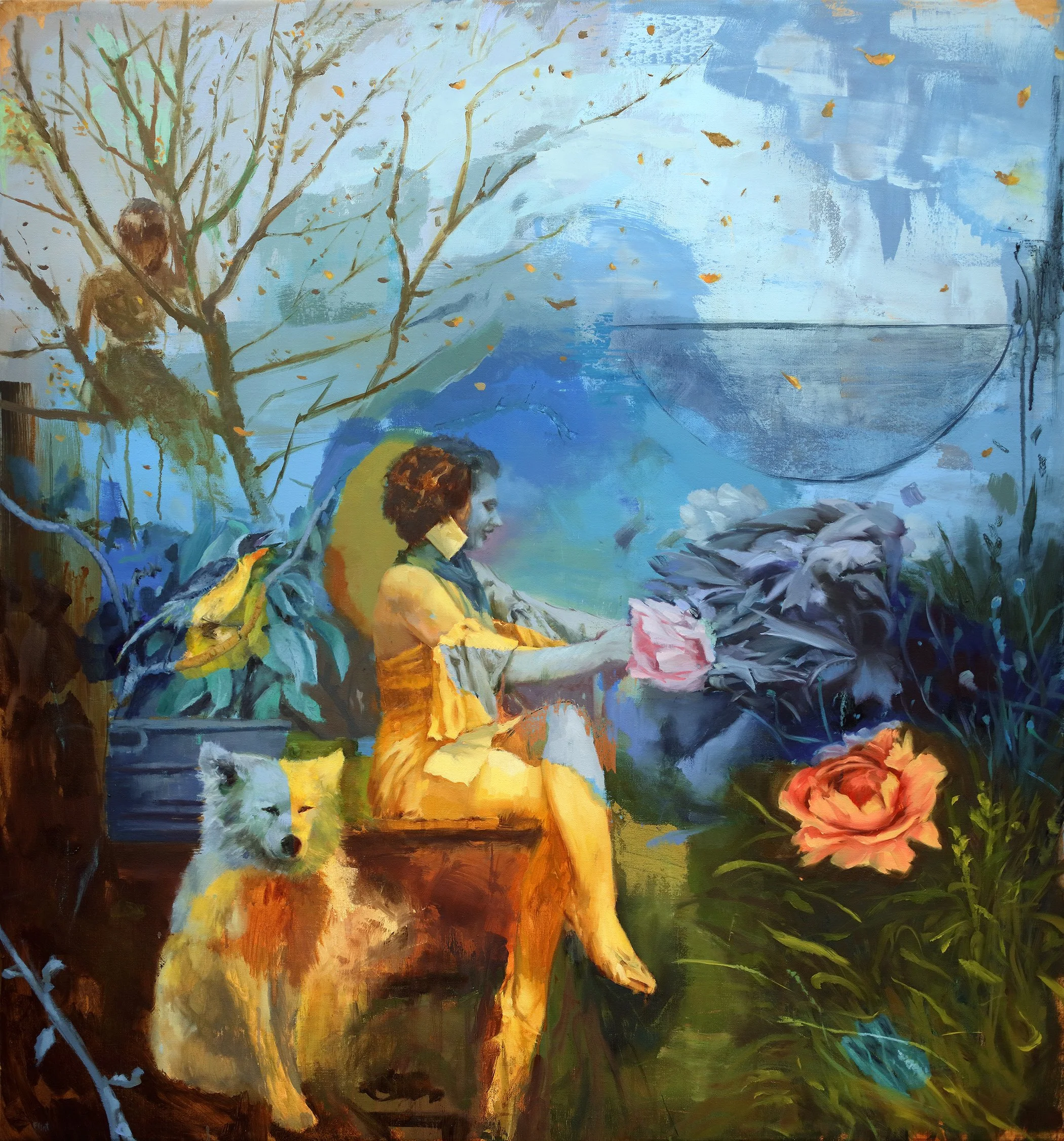
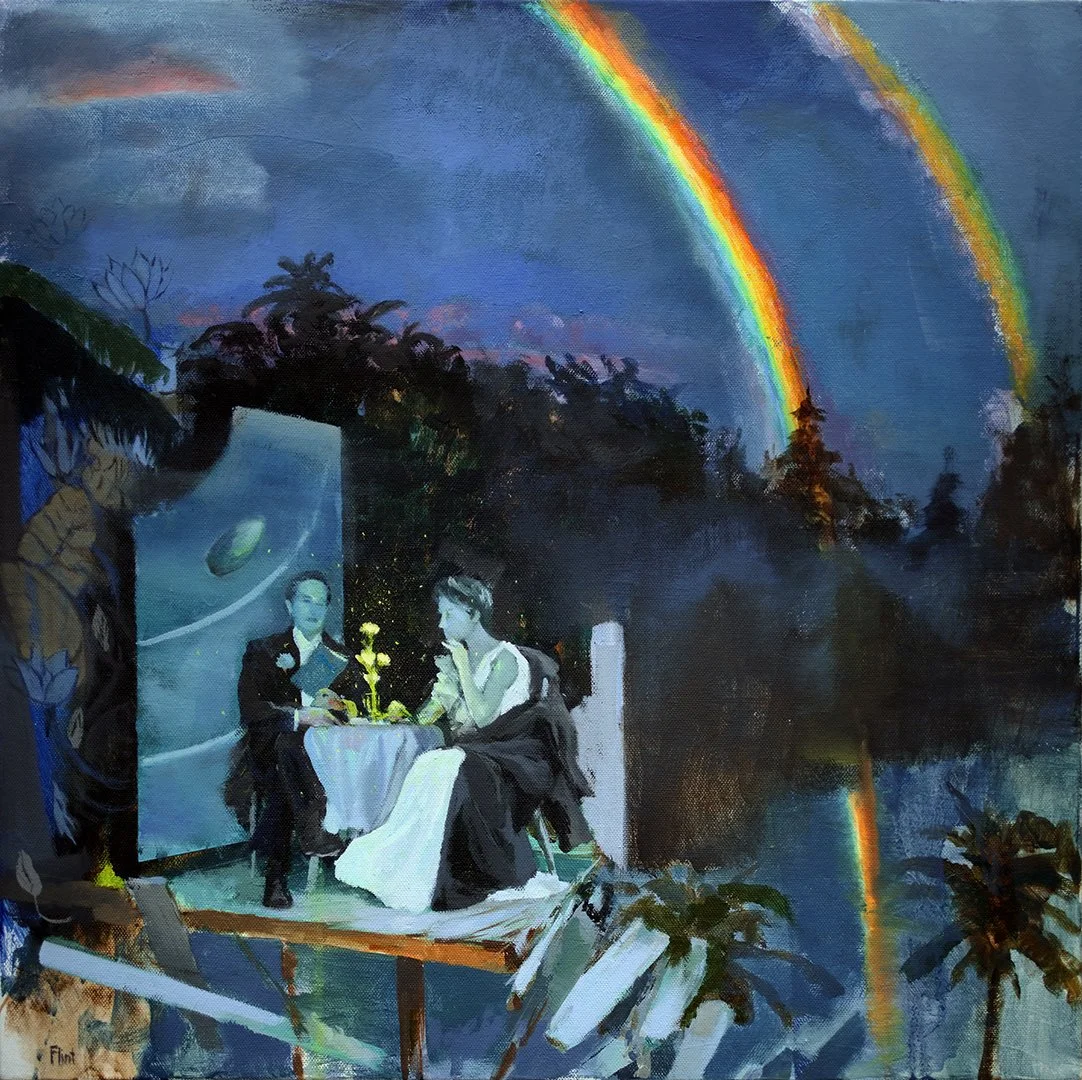
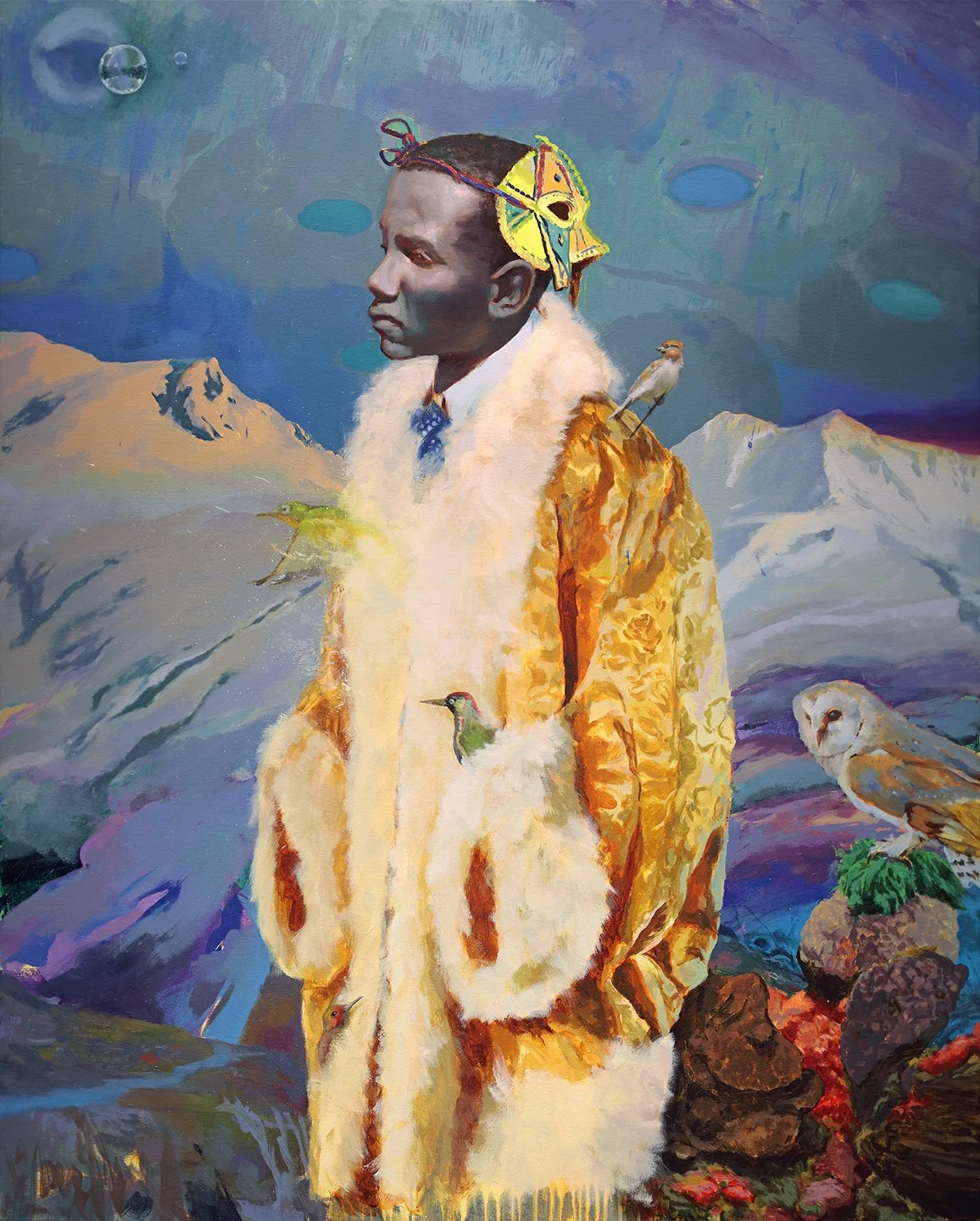
Summer Bloom, 16x20 inches, oil on linen
S251: In alcuni dei tuoi dipinti vedo una relazione con la tradizione architettonica del Modernismo, trasportata però in un contesto un po' fantascientifico (potrei dire: una villa su Marte!)... mi sembra una combinazione davvero unica, un montaggio di elementi incongrui. Ti chiedo di dirci se questo metodo di lavoro corrisponde a un tipo di eclettismo postmoderno o se la tua posizione è diversa.
J.F.: Prima della tua domanda non avevo mai considerato questo termine in relazione ai miei dipinti. È una nuova prospettiva attraverso cui guardare il mio lavoro. È sempre un dono, quindi grazie.
Il primo pensiero che mi viene in mente è che l'eclettismo è un concetto piuttosto ampio e rimanda alla cultura del remix che è sempre esistita nell'arte, così come nella musica, nella moda, nel design e nel cinema. Le novità nascono sempre dall'integrazione, dall'incorporazione o dalla rivisitazione di idee stimolanti, quindi in questo senso il mio lavoro potrebbe essere correlato all'approccio integrativo dell'eclettismo.
Mi interessa la sintesi di elementi come figure, paesaggi e architettura: voglio vedere come si combinano tra loro, in modo familiare ma inaspettato. A volte si fondono in un ambiente misterioso ma riconoscibile, altre volte la frattura è evidente. Non è chiaro perché io metta insieme queste giustapposizioni.
I miei dipinti rispondono in modo più naturale alla nostra formulazione del sé, al paesaggio atemporale in cui ci troviamo e alla creazione di miti che costruisce la nostra personalità. Per me questa qualità umana spesso incongruente, non lineare e simile a un palinsesto parla della natura multiforme dell'esistenza o di un individuo. Siamo un evento messo in moto da tutti questi elementi disparati, proprio come suggeriscono i miei dipinti.
Synchrony, 40×30 inches, oil on linen
The Archivist, 48×36 inches, oil on canvas
S251: In base a quali criteri scegli le diverse ambientazioni (il giardino, la villa moderna, il paesaggio montuoso) che metti in scena nei tuoi dipinti? Da dove trai ispirazione? Le figure umane che dipingi sono molto spesso impegnate in attività enigmatiche, avvolte in un'atmosfera drammatica. Mi piacerebbe sapere come arrivi a costruire queste situazioni e in che misura il tuo rapporto con la storia dell'arte contribuisce a definire queste scene.
J.F.: Sono convinto che sia il soggetto a scegliere me, piuttosto che essere io a riflettere troppo su cosa selezionare. Spesso sono attratto da un'immagine o reagisco a una lettura. Si verifica una sorta di attrazione senza parole. C'è un coinvolgimento con l'inconscio e la logica dei sogni e lo esploro con schizzi, disegni o software digitali. Questo mi aiuta a stabilire un punto di partenza per un dipinto, oppure viene abbandonato in questa fase. Forse tornerà, forse no. Ho molti di questi piccoli disegni veloci sparsi per lo studio.
Di solito inizio un dipinto senza averlo ancora completamente ideato, anche se ho realizzato dei modelli o degli schizzi. In questo modo trovo una soluzione attraverso l'atto stesso di dipingere, e questo mi costringe ad essere aperto alla scena che si sta sviluppando. Molti dipinti hanno preso forma in modi che non avrei potuto pianificare in anticipo.
Sebbene sia utile sia l'esperienza personale che la ricerca negli archivi di immagini, la maggior parte delle idee proviene dalla letteratura, dalla poesia, dalle scienze naturali e dalla storia dell'arte, come hai detto tu. Sul mio comodino ho penne e matite insieme a un piccolo blocco di carta per disegnare tutto ciò che mi viene in mente, spesso mentre leggo. Non sto illustrando un brano di un libro o altro, si tratta piuttosto di creare connessioni con ciò su cui stavo lavorando in studio quel giorno o quella settimana. È più una libera associazione con varie cose a cui ho pensato. Il cervello ha la capacità di creare connessioni inaspettate mentre si avvicina al sonno. Molti dipinti sono nati mentre ero sdraiato a letto.
Ci sono elementi ricorrenti, come tavoli, sedie o barche, che fungono da figure. Li vedo come una sorta di sostituti. Sono attratto dalle montagne e dai giardini, come hai detto tu. Questi elementi fungono più da metafora, simbolo o allegoria, verso la creazione di miti. Ultimamente le montagne sono state molto presenti. Queste caratteristiche geologiche hanno plasmato il nostro concetto di sé e ci hanno insegnato molto sul mondo naturale e sull'impegno umano attraverso il tempo e la cultura. Il pittore romantico tedesco Caspar David Friedrich ha collegato le montagne, e tutta la natura, alla contemplazione, alla libertà e alla creatività, indicando in ultima analisi la grande possibilità delle aspirazioni umane. Poeti come Byron, Shelley e Keats e filosofi come Nietzsche e Ruskin hanno rafforzato questo crescente senso di intuizione fornito dalla natura e in particolare dalle montagne. Questa interazione tra lo spazio fisico che attraversiamo e l'universo interiore è simboleggiata dalla montagna ed è stata esplorata in vari modi nel corso della storia dell'arte. Mountains of the Mind, di Robert Macfarlane, è una lettura incantevole sull’argomento.
House of Scorpio, 24x30 inches, oil on linen
S251: I tuoi dipinti sono sempre immersi in un'atmosfera di raro incanto, come se le situazioni narrate fossero pervase da un misterioso incantesimo. È un'atmosfera di magia arcaica, difficilmente collegabile a una dimensione tecnologica contemporanea. Il tuo lavoro sembra recuperare elementi e suggestioni da un passato favoloso. Da dove viene tutta questa intensità magica?
J.F.: Il mondo è sicuramente misterioso e magico. Ed è intenso e strano, più strano della nostra immaginazione. Con l'avanzare dell'età, i miti mi sembrano più rilevanti e profondi che mai. Mi piace il modo in cui i miti punteggiano la quotidianità con momenti o episodi straordinari che trasformano la storia in qualcosa di misterioso. Questo allontanarsi dalla realtà per comprenderla meglio è il mio modo di concepire la pittura. Mi viene in mente l'antropologo Claude Levi-Strauss, che parla della funzione socioculturale dei miti: "La narrazione mitica serve a rendere il mondo intelligibile risolvendo le contraddizioni della vita". I miti sono sfuggenti e si rivelano solo in parte, un po' alla volta. Mi piace questo aspetto.
Night Gardeners, 60x48 inches, oil on canvas
S251: Tu fai un uso molto particolare e spettacolare del colore, come se fossero in azione effetti speciali di straordinaria vivacità ed emozione. Le immagini cinematografiche di oggi - ad alta definizione, ipnotiche, super dettagliate - sono tra le tue fonti di ispirazione?
J.F.: Il cinema ha sempre avuto una grande influenza su di me. All'inizio della mia carriera, appena diplomato all'accademia di belle arti, pensavo di lavorare come scenografo per il cinema. Sono attratto dalle atmosfere dai colori quasi monocromatici. Oppure dalle inquadrature che invitano lo spettatore a entrare in un mondo. O dal modo in cui l'atmosfera chiarisce lo spazio. Questi sono spesso gli aspetti a cui reagisco intuitivamente nei film.
Nella serie The Night Garden a cui forse ti riferisci, ho usato colori vivaci come metafora di transizione e cambiamento. Questo aggiunge una tensione necessaria all'opera che esalta la scena oltre la sua qualità onirica o contraddittoria. In precedenza hai menzionato un dipinto che sembra "una villa su Marte". Queste correlazioni inaspettate all'interno delle scene sono importanti, ma è il colore che esalta il senso di inquietudine. Ho guardato l'aurora boreale come riferimento per i colori di tutta la serie. Invece di considerare le luci come un fenomeno del cielo, ho trasposto quel colore elettrico sul paesaggio.
Night Skiing 40x40 inches, oil on canvas
Porcelain Ballons 24x24 inches, oil on canvas
S251: La tua pittura mette in atto una reinterpretazione della tradizione pittorica figurativa moderna, utilizzando tecniche diverse. Trasformi il realismo in sogni, padroneggi la dimensione espressionista con estrema abilità, utilizzi temi tratti dalla storia dell'arte ma non ricorri alla tecnica della citazione in modo freddo e superficiale. Di conseguenza, il tuo approccio mi sembra molto originale. Costruisci una dimensione poetica visionaria, crei situazioni fantastiche in cui collochi personaggi spesso impegnati in attività misteriose. È corretto affermare che il tuo mondo visivo rielabora la pittura ottocentesca mescolandola con una sorta di surrealismo contemporaneo per arrivare a un libro di fiabe avventuroso, a volte oscuro e sempre sbalorditivo?
J.F.: Sì, è assolutamente giusto dirlo ed è un grande complimento. Grazie per le gentili parole. La pittura del XIX secolo ha sicuramente un ruolo influente, dato che amo in particolare Degas e Manet. Ci sono molti pittori precedenti che hanno influenzato il mio pensiero, come la schiettezza di Velazquez o l'atmosfera frammentata di El Greco. Il modo in cui interpretava lo spazio è stato una rivelazione quando ho scoperto il suo lavoro da studente. Surrealisti come Leonora Carrington e Hieronymus Bosch, con le loro potenti qualità immaginative, mi ricordano di fidarmi della mia stranezza e del mio intuito.
Parte dell'oscurità e del mistero di cui parli deriva dalla tradizione romantica e dalla sua enfasi sulla natura, lo spiritualismo e il legame con il gotico. Da bambino, crescendo negli Stati Uniti occidentali, ho vissuto la vastità della natura selvaggia, i deserti aperti e le catene montuose epiche. Ai miei occhi giovani, queste topografie erano inviti e avvertimenti in cui bellezza e pericolo si intrecciavano. Quel duplice precipizio è il fondamento dei miei dipinti. Sto ancora inseguendo quelle narrazioni nascoste.
Prima di concludere, ho un ultimo pensiero che riguarda il tuo Paese natale. L'ho letto molti anni fa. Perdonami, non ricordo dove l'ho trovato. Forse tu puoi illuminarmi. Diceva che in Italia non si è considerati artisti maturi e al pieno delle proprie capacità fino ai sessant'anni. Che sia vero o no, questa è stata per me fonte di conforto.
Grazie mille per questa fantastica intervista.
Carousel, 36x48 inches, oil on wood
A villa on Mars: The mysterious and magical world of Joshua Flint
We present on Stanza 251 an intense and stimulating conversation with American painter Joshua Flint. His arcane scenes are saturated with dreamlike colors, set in places altered by inexplicable phenomena: phosphorescent snow-capped mountains, gardens and forests imbued with a dark vitality, mysterious interiors with large windows overlooking alternative dimensions. His characters burn inside cold flames, stand petrified in the middle of stormy seas, bathe in impossible pools. Enjoy the read.
Along The Steel Breeze, 16x20 inches, oil on linen
S251: In some of your paintings I see a relationship with the architectural tradition of Modernism, transported, however, to a somewhat sci-fi setting (I could say: a mansion on Mars!)...it seems to me a very unique combination, a montage of incongruous elements. I ask you to tell us if this method of working corresponds to a postmodern type of eclecticism or if your position is different.
J.F.: I’ve not considered this term relating to my paintings prior to your question. It’s a new lens to view my work through. That’s always a gift, so thank you. The first thought that comes to mind is that eclecticism is quite broad and speaks to the remix culture that has always been around in art like it has in music, fashion, design, film. New things are always building on or incorporating or re-envisioning inspiring ideas so in that sense my work could relate to the integrative approach of eclecticism.
I’m interested in the synthesis of elements like figures, landscapes, and architecture, - I want to see how they all sit together, in a familiar yet unexpected way. Sometimes they coalesce into a mysterious yet relatable type of environment and other times a fracturing is evident. Why I put these juxtapositions together in the first place is not clear.
My paintings respond more naturally to our formulation of self, the atemporal landscape we find ourselves in, and the myth making that constructs our personhood. To me this often incongruent, nonlinear, and palimpsest like human quality speaks to the multifaceted nature of existence or an individual. We are a happening put in motion by all these disparate elements, much like my paintings suggest.
Root System, 16x12 inches, oil on linen
Sanctuary, 48x36 inches, oil on canvas
S251: Based on what criteria do you select the different settings (the garden, the modern villa, the mountainous landscape) that you stage in your paintings? From where do you derive these suggestions? The human figures you paint are very often engaged in enigmatic activities, wrapped in a dramatic atmosphere. I'd like to know how you come to construct these situations, and to what extent your relationship with art history helps to define these scenes.
J.F.: I’m a believer in subject matter picking me versus me being overly deliberate about what to select. Often, I will gravitate to an image or respond to a reading. A sort of wordless pull occurs. There’s an engagement with the unconscious and dream logic and I will explore this with sketches, drawings or with digital software. This helps me establish a starting point to a painting or it gets abandoned at this stage. Maybe it’ll come back around or maybe not. I have many of these quick, little drawings around the studio.
I’m usually starting a painting without it fully formed even if I’ve made mockups or sketches. That way I find a resolution through the act of painting, and it forces me to be open to the unfolding scene. Many paintings have come together in ways I couldn’t have preplanned.
Although both personal experience and sifting through archives of images is useful, most ideas come from literature, poetry, natural science and art history, as you said. On my nightstand I have pens and pencils along with a little pad of paper to sketch anything that might come to mind, often when I’m reading. I’m not illustrating a passage from a book or anything – it’s about creating connections to whatever I was working on at the studio that day or week. It’s more of a free association to various things I’ve been considering. The brain has a way of making unexpected connections as it shifts towards sleep. Many paintings have begun while lying in bed.
There are recurring elements, like tables or chairs or boats, that act like figures. I see them as sort of stand-ins. I’m drawn towards mountains and gardens, as you mentioned. These elements act more as metaphor, symbol, or allegory, towards myth making. The mountains have been prominent lately. These geological features have shaped our concept of the self and taught us much about the natural world and human endeavor across time and culture. The German Romantic painter Caspar David Friedrich linked mountains, and all of nature, to contemplation, freedom, and creativity; ultimately pointing towards the grand possibility of human aspirations. Poets like Byron, Shelley, and Keats, and philosophers, such as Nietzsche and Ruskin, reinforced this growing sense of insight provided by nature and specifically to mountains. This interplay between the physical space we travel through and the universe within is symbolized in the mountain and has been explored in various ways throughout art history. Mountains of the Mind, by Robert Macfarlane is a lovely read on the subject.
Rare Sighting, 36x36 inches, oil on canvas
Sound System, 40x40 inches, oil on canvas
S251: Your paintings are always immersed in an atmosphere of rarefied enchantment, as if the situations narrated are imbued with a mysterious spell. It is an atmosphere of archaic magic, hardly? linked to a contemporary technological dimension. Your work seems to recover elements and suggestions from a fabulous past. Where does all this magical intensity come from?
J.F.: The world is certainly mysterious and magical. And it’s intense and strange– stranger than our imaginations. As I've gotten older myths seem more relevant and insightful than ever. I enjoy how myths punctuate mundanity with an extraordinary moment or incident that spins the story into an uncanny place. This moving away from reality to better understand reality is how I think about painting. I’m reminded of anthropologist Claude Levi-Strauss who talks about how myths have a sociocultural function: “The mythic narrative is to make the world intelligible by resolving the contradictions of life.” Myths are slippery and reveal themselves partially, a little at a time. I enjoy that.
The Nature Forum, 24x24 inches, oil on canvas
The Pearl, 16x16 inches, oil on wood
S251: You make very particular and spectacular use of color, as if special effects of extraordinary vividness and emotion were in action. Are today's cinematic images - high-definition, hypnotic, super detailed - among your sources of inspiration?
J.F.: Film has always been an influence. Early in my life, as a recent art school graduate, I thought about working in production design for movies. I’m drawn towards moods of near monochromatic color. Or an establishing shot that invites the viewer into a world. Or how the atmosphere elucidates space. These are often what I intuitively respond to in film.
In The Night Garden series you may be referring to, I used vibrant color as a metaphor for transition and change. This adds a necessary tension to the work that heightens the scene beyond their dreamlike or contradictory quality. You previously mentioned a painting that seems like “a mansion on Mars”. Those unexpected correlations within the scenes are important, but it is the color that heightens the sense of the uncanny. I was looking at the Northern Lights as a reference for color throughout that series. Instead of the lights being a phenomenon of the sky, I transposed that electric color onto the landscape.
Flushed & Flamelike Themselves, 68x58 inches, oil on canvas
S251: Your painting enacts a re-interpretation of the modern figurative painting tradition, using different techniques. You turn realism into dreams, you master the expressionist dimension with extreme skill, you make use of themes taken from art history but do not use the technique of quotation in a cold and superficial way. As a result, your approach seems very original to me. You construct a visionary poetic dimension, you produce fantastic situations in which you place characters often engaged in mysterious activities.
Is it fair to say that your visual world reworks nineteenth-century painting by mixing it with a kind of contemporary surrealism to arrive at an adventurous, sometimes dark and always mind-boggling storybook?
J.F.: Yes, absolutely that’s fair to say and quite high praise. Thank you for such kind words. Nineteenth century painting certainly has an influential role as I love Degas and Manet, in particular. There are many earlier painters who impact my thinking, like the directness of Velazquez or the fragmented atmosphere of an El Greco. The way he interpreted space was a revelation when I found his work as a student. Surrealists such as Leonora Carrington and Hieronymus Bosch with their powerful imaginative qualities serve as reminders to trust my strangeness and intuition.
Some of the darkness and mystery you mention arrives through the Romantic tradition and its emphasis on nature, spiritualism, and connection to the Gothic. As a child growing up across the western United States I experienced vast wilderness, open deserts, and epic mountain ranges. To my young eyes these topographies were invitations and warnings where beauty and danger were interwoven. That dual precipice is where I ground my paintings. I’m still chasing those hidden narratives.
Before we end, I had one last thought from your home country. I read it many years ago. Forgive me I don’t know where I came across this. Maybe you can enlighten me. It said in Italy you’re not considered a mature artist working at full capacity till you're sixty years old. That has been a source of comfort whether true or not.
Thank you very much for this terrific interview.
Transit of Venus, 30x40 inches, oil on linen
Joshua Flint
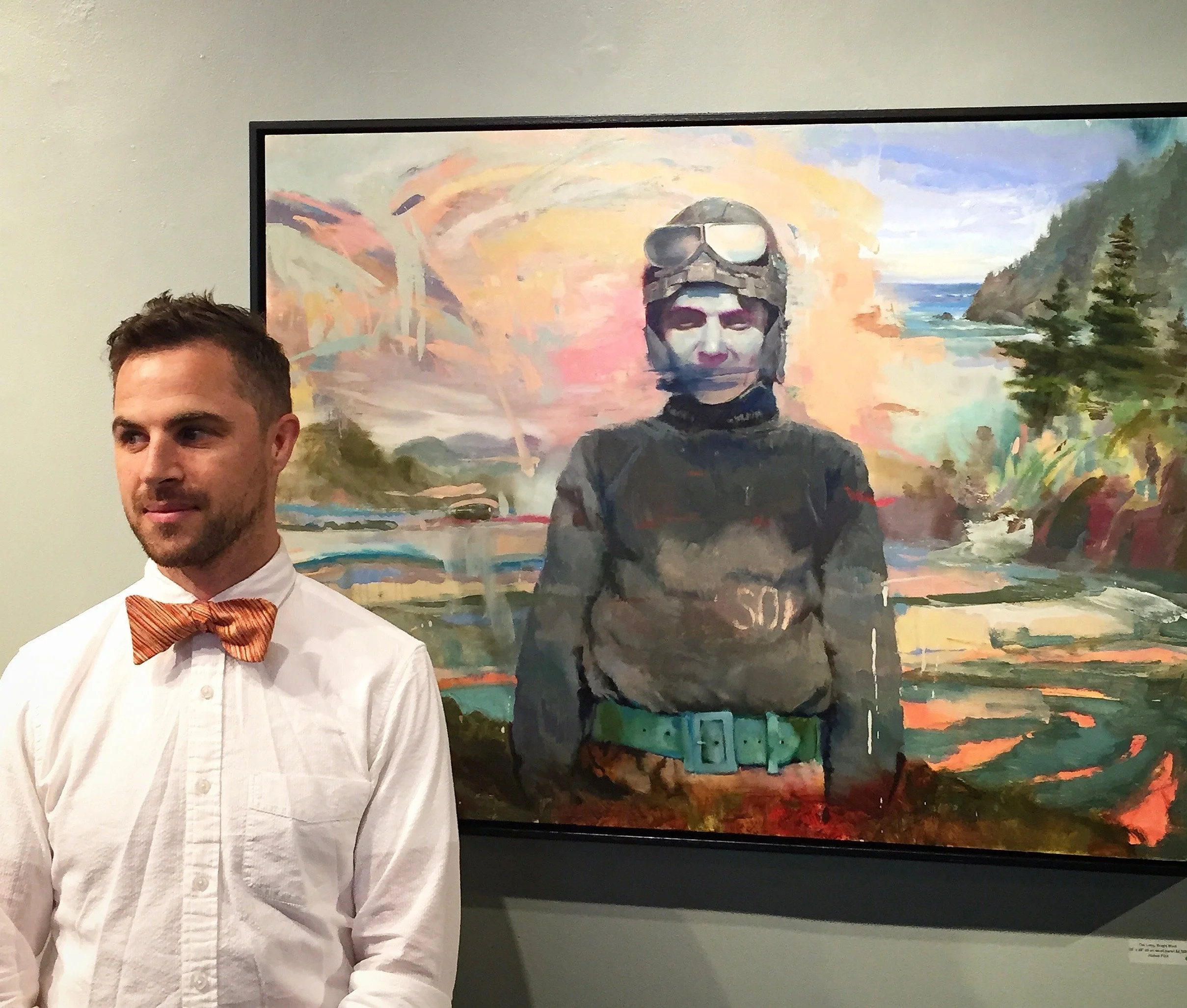
Joshua Flint è un artista visivo che utilizza la pittura a olio per creare archetipi e ambienti tipici dell'Antropocene. Nei suoi dipinti, figure immaginarie proteggono giardini, diventano habitat avicoli e impollinano fiori. Gli spazi architettonici sintetizzano elementi interni ed esterni simbolici delle complessità degli occupanti. I suoi dipinti esplorano il ruolo storico e la traiettoria delle scienze naturali, della connessione e della disconnessione, dello spirito e della materia, della frattura e della formazione. Spinto da interessi accademici nel campo della silvicoltura e dell'ecologia della fauna selvatica prima di rivolgere la sua attenzione all'arte, Flint ha scoperto che le scienze non rispondevano pienamente alle sue domande sull'identità, la memoria e la storia. Il suo lavoro trae ispirazione dalla letteratura, dalla poesia, dalla filosofia, dalla scienza e dalla scrittura naturalistica. I temi emergono attraverso la ricerca nell'ambito dell'ecopsicologia e della mitologia culturale, nonché attraverso la riflessione sull'esperienza personale. Joshua ha esposto le sue opere in musei d'arte regionali. Le sue opere sono state collocate nella Coléccion Solo di Madrid, in Spagna, nell'Hinson Art Museum della Wingate University, nella collezione della città di Astoria, Oregon, e in collezioni private negli Stati Uniti, in Europa e in Asia. È professore associato al Pacific Northwest College of Art.
Joshua Flint is a visual artist utilizing oil paint to create archetypes and environments found in the Anthropocene. In his paintings imaginary figures protect gardens, become avian habitats, as well as pollinate flowers. Architectural spaces synthesize interior and exterior elements symbolic of the intricacies of the occupants. His paintings explore the historical role and trajectory of the natural sciences, of connection and disconnection, of spirit and matter, of fracture and formation. Driven by academic pursuits into forestry and wildlife ecology before turning his attention to art, Flint found that the sciences didn’t fully engage with questions he had about selfhood, memory, and history. His work draws inspiration from literature, poetry, philosophy, science, and nature writing. Themes arise through research into eco-psychology and cultural mythology, as well as through reflection of personal experience. Joshua has shown his work at regional art museums. His work has been placed in Coléccion Solo in Madrid, Spain, the Hinson Art Museum at Wingate University, the city collection of Astoria, OR, and in private collections in the US, Europe, and Asia. He is an associate professor at Pacific Northwest College of Art.