

La vasca
Esistono lavori peggiori che consegnare alcol a domicilio. Diversi clienti della bottiglieria di Beverly Hills erano stelle del cinema, e una volta portai casse di champagne a Villa Playboy.
A dare ordini nel magazzino era un simpatico gay di quelli che amano il cuoio nero. Era baffuto, ironico, e gli piaceva farsi pisciare addosso. “Uh!” diceva, “oggi ti mando a trovare Lana Turner!” Come se ciò fosse un fantastico privilegio.
Immagine di William Rankin
Esistono lavori peggiori che consegnare alcol a domicilio. Diversi clienti della bottiglieria di Beverly Hills erano stelle del cinema, e una volta portai casse di champagne a Villa Playboy.
A dare ordini nel magazzino era un simpatico gay di quelli che amano il cuoio nero. Era baffuto, ironico, e gli piaceva farsi pisciare addosso. “Uh!” diceva, “oggi ti mando a trovare Lana Turner!” Come se ciò fosse un fantastico privilegio. Lana Turner aveva ordinato tanto ottimo gin. Era una settantenne ancora seducente. Anziché darmi la mancia, mi guardò + negli occhi e batté le famose ciglia. Sarei diventato il suo schiavo. Non per nulla le stelle sono stelle.
Conobbi così anche Cyd Charisse, Fred Astaire, Barbara Stanwyck e Barbara Eden. Quest’ultima aprì la porta agghindata come la fatina che aveva interpretato in tivù. Dietro il velo colore del cielo non si notavano le rughe, le occhiaie, la dentiera. Beveva whisky e vino bianco fruttato.
Da quel lavoro imparai solo che le vecchie glorie del mondo dello spettacolo non danno la mancia.
Un giorno il capo mi disse, “Uh! Oggi ti mando alla reggia di Giggles Gowanus.”
Mai sentita. “Uh. Ganzo.”
“Vedrai. Ho sentito dire che è generosa con le mance.”
Ci toccava caricare le casse da consegnare. Era un lavoro di fatica, ma al posto di bei muscoloni ci venivano dolori alla schiena. La Gowanus beveva esclusivamente veleno per barboni, e abitava nella brutta, vecchia Hollywood. Non era facile parcheggiare in quel quartieraccio, e se prendevamo multe, le pagavamo noi.
Non mi aspettavo nulla di buono, ma quella catapecchia era peggio. Il carrello pesava, faceva un gran caldo. Suonai.
“Avanti, è aperto!”
Nessuno lascia le porte aperte, a Hollywood.
Entrai. C’era tanfo di gatto, sudore, vestiti sporchi e piscio. Il carrello passava male sulla moquette colore del fango. “Permesso? Sono qui con tanta buona roba da bere.”
“Sia lodato il cielo. Vieni, vieni.”
Una vecchia obesa dai capelli corvini stava accovacciata su un sofà distrutto. La vestaglia lisa la copriva appena.
“Dove lo metto, tutto questo nettare?” Volevo aiutarla. Volevo la mancia.
“Grazie, sei carino,” disse. “Vai pure in cucina. Poi quando hai finito avrei un’altro favore da chiederti.”
“Certo. Nessun problema.”
La cucina era peggio del salotto. Sistemai le bottiglie di vino bianco nel lercio frigo. Riempii uno scaffale con bottiglione di vino rosso fatto coi vermi.
Tornai nel salotto con le casse dei superalcolici. Mi aspettavo di trovarmela davanti nuda. Cosa non si fa, per una mancia. Invece, “Scusa, ma non cammino bene, e non sono forte come una volta. Se non ti dispiace... ”
Indicò un bacino di plastica sulla moquette accanto al sofà. Non l’avevo notato, entrando.
Era un acquario. Pesci marroni fluttuavano in un piccolo mare giallo.
Alzai la vaschetta stando attento a non sbrodolare, la portai nel cesso e la svuotai nella vasca da bagno. Il tombino era intasato. Tornai in cucina e presi un mestolo. Non c’era sapone per lavarsi le mani.
“Grazie tesoro,” disse. “Vieni, ti voglio dare qualcosina.”
Mi avvicinai al sofà. ‘Che non sia un bacino,’ pensai.
Mi porse un dollaro. “Grazie,” dissi. “Non è necessario, ma lo apprezzo. Serve altro?”
“Vuoi vedere una cosa?”
Ero titubante. Avevo già visto abbastanza. “Certo,” risposi.
Indicò una cornice d’argento sulla credenza accanto alla porta. Era lei nella foto, nuda sotto una fluttuante toga, in una posa da danzatrice. Un fisico a clessidra. Fischiai.
“Ero bella, vero?”
“Cazzo.”
“Ma non solo. Ero anche brava a raccontare barzellette. Sapevo far ridere, sul serio. Vuoi sentirne una?”
“Spara.” E risi davvero. Era buffa.
“Ma mi davano solo ruoli da comparsa, non mi facevano mai parlare o ballare. Ed eccomi qua.”
“Eccoci qua. Allora ciao, devo tornare al lavoro.”
“Ciao, sei bello, giovane e forte.” Rise gorgogliando mentre uscivo. Chiusi bene la porta ma la sentivo sempre.
Matthew Licht
Immagine di William Rankin

L'ultima vera barzelletta
Chiudevano i migliori negozi. Posti dove cercavo libri e LP usati, cantine che potevano essere gallerie d’arte o negozi della carità, rifugi funky che permettevano una tregua dal mondo in giornate uggiose volgevano occhi spenti alle strade che prima avevano mantenuto in morbosa vita.
L'ultima vera barzelletta - Last of the Practical Jokers
(testo bilingue-bilingual text)
Valentina Biasetti, Millimentri (sensazioni di cose minime) #4, tecnica necessaria su carta-matita e pastelli a olio, mm750x750, 2015
Chiudevano i migliori negozi. Posti dove cercavo libri e LP usati, cantine che potevano essere gallerie d’arte o negozi della carità, rifugi funky che permettevano una tregua dal mondo in giornate uggiose volgevano occhi spenti alle strade che prima avevano mantenuto in morbosa vita.
I bottegai sono mortali. Si portano all’oltretomba le cianfrusaglie della vita che intendevano mettere al mondo. Se non trovano eredi o apprendisti cui rifilare saperi e ciofeche, il loro essere commerciale appassisce e smette di esistere.
La Buffa Bottega era più fragorosa dei suoi vicini e colleghi. Lampadine multicolori scintillavano anacronisticamente dentro forme di lettere di latta, contorte e di varie dimensioni, l’equivalente di una cravatta psichedelica ultra-larga, o di un cuscino whoopee infilato sotto le mele di un tetro isolato. Quella vetrina afferrava per il bavero i passanti, gli spruzzava in faccia saliva calda e alito cattivo, e sbraitava con un accento assurdo barzellette senza senso.
Oggetti sprovvisti di inerente giocosità—bombe puzzolenti, polvere prurito, parrucche per simulare la calvizie, occhiali distorsori con attaccati nasi finti e grottesche sopracciglia, sigaroni di gomma, finti polli morti e spennacchiati, vomito posticcio e stronzi di cane artificiali—attiravano l’occhio come i coltelli a scatto e le riviste di donne nude nelle vetrine di altri squallidi negozi del quartiere.
C’era uno scaffale di riviste per soli adulti nel retro de La Buffa Bottega. Immaginai che fosse quella la sua vera fonte di guadagni. Un impiegatuccio in cerca di emozioni forti entra e prende l’ultimo numero di Troie e Sciattoni. Mentre il commerciante infila il lerciume dentro la busta di asettica carta marrone, chiede anche una bombola di spray-scoreggia. Tipi come lui comprano bicchieri-sbrodolo per prendersi gioco delle segretarie al lavoro, sistemano sistole schizza-mutandine sulla linguetta delle scarpe. La vita domestica è meno divertente. Sfigato single in mutande sul divano che si gode la nuova rivista porno mentre la tivù sussurra un vecchio episodio di una serie comica che ai suoi tempi forse faceva morire dal ridere.
Il venerando commerciante de La Buffa Bottega lavorava solo, notai. Cercavo lavoro. Guardavo la vetrina colma di risate liofilizzate come i barboni guardano le vetrine delle rosticcerie. Un teschio di plastica in posa sopra un finto cesso da salotto che strabordava di finti stronzi mi diede una scossa d’ispirazione. Entrai.
“Cosa ti fa pensare che sei qualificato?” Sembrava che il gestore del negozio mi volesse prendere per il culo. Non era così. Ascoltò la mia storia.
Molti lavori, a lungo andare, si rivelano essere delle barzellette poco divertenti. Sam il commerciante della comicità mi prese in prova. Voleva tenere aperto fino a mezzanotte per servire fantomatici turisti nottambuli, ma voleva anche poter tornare a Weehawken per la cena. Un fesso da minimo stipendio gli avrebbe permesso di realizzare questo grandioso sogno.
L’ultima intervista per un lavoro era stata più interessante. Mi ero presentato a un grattacielo anonimo, dove parlai con diverse persone. Quando chiesi che sorta di lavoro offrivano, farfugliarono in modo ambiguo di analisi di foto satellitari. L’ufficio del direttore sfoggiava foto della luna scattate da astronauti Nasa, abilmente incorniciate. Gli faceva gola che parlassi il tedesco. Era un grande ammiratore di Thomas Mann. Discutemmo del suo romanzo Il cigno nero, anziché di ciò che avrei dovuto fare nell’ufficio attualmente vuoto al piano di sotto.
Forse mi assunsero. Non aprii la lettera che mi inviarono, non la volli quasi toccare. Chissà dove finirono le mie impronte quando la buttai in un cassonetto a molti isolati da casa mia.
Sam il commerciante della comicità mi guardò senza espressione. “Sai passare il cencio, laureato del tubo?”
Pulire pavimenti di linoleum disegnati apposta per sembrare tollerabilmente sporchi conferisce una sorta di pace. Il turno serale a La Buffa Bottega era sereno, se non altro. Un cliente regolare, che indossava completi sartoriali di tessuti sgargianti da mozzare il fiato, finiva una bombola di scoreggia-spray a settimana. Non degnò mai nemmeno di uno sguardo la libreria porno.
Lo sgabello girevole dietro la cassa nichelata che sembrava il modello di un grattacielo Art Déco era comodo. Quando finivo di sperimentare scenografie di vetrina, o di stabilire gerarchie dei prodotti-gag in base all’indice di divertimento dentro le teche illuminate, mi sedevo a leggere. Thomas Mann, più che altro.
La sera della prima nevicata di quell’autunno, entrò una donna. Pestò lo zerbino per levare neve fresca dagli stivaletti scamosciati, scosse il trench, inspirò il caldo profumo del negozio, e si diresse verso lo scaffale delle riviste zozze.
Sam il commerciante della comicità di solito vittimizzava nuovi clienti con dimostrazioni pratiche di prodotti-gag, oppure raccontava barzellette indecenti. Era bravo, faceva colpo, di solito vendeva. Preferivo un approccio minimalista. I clienti sognano. La mercanzia sparge la propria magia risogenica. Intervengo solo dietro richiesta. Vendevo finto vomito a galloni. Le cifre mi fruttarono fischi d’ammirazione dal capo.
La Buffa Bottega era attrezzata di specchi deformanti antifurto. Potevo tener d’occhio tipi sospetti mentre spiegavo, per esempio, la preparazione di cubetti di ghiaccio raffiguranti donne nude a nonnine ansiose di sedurre decrepiti stalloni. Finsi di essere rapito dalla maestrale prosa di Mann sul soggetto dell’amore e la salute polmonare mentre lei sfogliava Stròzzami, una rivista per feticisti.
Il suo cappotto era da film noir, oppure da film rose, persino rouge. Le guardavo le mani. Esiste una sottospecie di ladri prestigiatori che indossa impermeabili. Li sgamo subito.
Un tratto di banco privo di vita si estende a sinistra della cassa. I clienti che entrano sono sbalorditi dalle finte carogne di polli, e dalle false teste rimpicciolite di un realismo agghiacciante nel display centrale. “Dacci dentro coi capelli,” aveva detto Sam all’artigiano. “Cazzo, usa pure capelli veri. Rimpicciolisci qualche testa genuina. Ti pagherò extra. I fessi li compreranno.” E infatti li comprarono.
Il mio sogno era di creare un microcosmo di magia dentro la zona morta de La Buffa Bottega. Inutile dire che questa impresa illusionistica fu ispirata da Mann, anche se il personaggio del racconto Mario e il mago non ha bisogno di marchingegni kitsch.
Misi mentalmente a punto un trucco per far sparire le mutandine della nuova cliente, a patto che ne portasse.
Sogni commerciali e montagne incantate fecero puf! quando sbatté sul banco la sua selezione di riviste porngrafiche. Aveva sul viso un’espressione di sfida: compro riviste segaiole pur essendo una donna, e con ciò?
Mi sarei preso a calci che non mi metto mai la cravatta. Avrei potuto praticarle la gag della cravatta che si rizza. Ma non avevo niente. Niente!
“Ehm, le teste rimpicciolite sono in offerta speciale, visto che è giovedì.”
“Passo già abbastanza soldi al mio psicanalista, grazie.”
Mi feci apparire sul naso degli occhiali effetto strabismo. “Ti farò pagare solo la metà di quanto gli dai,” dissi, massaggiandomi pensierosamente il mento.
“La masturbazione mi mantiene sana di mente,” disse.
Potevo solo battere i tasti della cassa per concludere la transazione. Tolsi gli stupidi occhiali-gag. Le piacevano riviste bondage, dalla roba leggera tutta sculaccioni fino a quella più dura e scura che Sam il commerciante della comicità riusciva a sopportare. Cioè non troppo hard. Niente sangue, o altre scorie umane.
“Che diresti di un paio di manette velcro per accompagnarle?” dissi.
“Sono entrata solo perché la tua stamberga è leggermente meno minacciosa degli altri cessi della zona.”
“Scusa. Serata lenta, e solitaria.”
“Meglio così,” disse. Pagò le riviste con un biglietto da cento dollari fresco di zecca, intascò le sudicie banconote di piccolo taglio che le porsi, afferrò la sua meravigliosa busta da sditalino, e si perse nella finta scoreggia che suona ogni volta che qualcuno esce dal negozio. Strinsi il bulbo di un finto klaxon, una gavia che richiama l’anima gemella in una notte metropolitana nella quale nessuno capiva le sue barzellette. Andai a spolverare lo scaffale del fluido glaciale, sperando in un soffio del suo profumo, o del suo odore ascellare.
‘Torna, per favore.’ Una silenziosa preghiera rivolta alle teste rimpicciolite, che non avevano bisogno di essere spolverate. ‘Ti prego, torna.’
La magia tsantsa funzionò. Ricomparve a La Buffa Bottega mentre praticavo un trucco per far sparire finti stronzi. Non salutò. Non sganciò una fialetta puzzolente. Si diresse dritto al retro del negozio, verso lo scaffale porno-anche-per-donne.
Era vestita in modo più femminile, a parte il trench. Feci scomparire altre finte feci, e la persi di vista nell’infinità degli specchi distorsori.
“Niente male,” disse, proprio al momento cruciale del passaggio alla mano sinistra. “Mi sembrò praticamente di sentire quella merda fare puf! Rifallo, dai.”
Mi spinsi un pugno metafisico in bocca per non blaterare, “Speravo che dicessi proprio così.” Materializzai una discreta busta di carta marrone con uno svolazzo dietro la schiena.
Aveva cambiato gusti. Tenere gnocche, Fregna acerba e Lolite implumi erano tra le riviste che avevo convinto Sam il commerciante della comicità a esporre. Vendettero parecchio, e quel successo mi fruttò una certa libertà nella scelta di materiale per soli adulti. Lubrificò la vendita di sterminati microfoni del ventriloquio, e intere macellerie di finti pollici insanguinati.
Tenni chiusa la bocca. Diressi uno sguardo da cinema muto verso l’orologio psichedelico con sagome della Kama Sutra al posto dei numeri, come stessi implorando. Mi mostrò pietà, abboccò.
“A che ora smonti?”
Materializzai una testa rimpicciolita sul banco. Lei non portava l’orologio, o gliel’avrei sfilato per farlo riapparire sotto il finto collo insanguinato, con le mani a indicare la mezzanotte delle streghe. “All’ora di chiusura,” dissi.
“Non fare il furbo,” disse. “O forse non vuoi uscire con me per fare del safe sex.”
“Stasera chiudiamo presto.”
Cercò di pagare le riviste con delle banconote finte, poi propose di vincermele al gioco usando una finta moneta a due teste. Stavo per dirle che il sudiciume era un omaggio della ditta, quando tirò fuori dalla borsa un autentico biglietto da cinquanta dollari.
“Una copia gratis di Screw con l’acquisto di dieci riviste patinate,” dissi.
“Affare fatto,” disse. “Stringimi la mano.”
Com’era prevedibile, mi fece sobbalzare con un anello elettroshock—un nuovo modello che sprigiona voltaggio da far traballare i denti del giudizio. “Ahio,” dissi.
Finse di rubare occhiali a raggi X mentre passavo il cencio. “Non sei Rocco Siffredi,” disse.
“Beh, tu non sei Albert Einstein. Quei cosi lì fanno vedere ologrammi di donne nude solo sotto luce ultravioletta.” Spensi tutto, e appesi alla porta il cartellino Closed, un gesto stupido perché poi tiravo giù il bandone stile carcere, a prova di bomba.
“Non potresti trovare un lavoro migliore?”
“Come, mollare il mondo dello spettacolo? E poi... tu che lavoro fai? Sei per caso la direttrice del Metropolitan Museum?”
Sbottonò il trench, rivelando una T-shirt con la scritta Sindacato Raccoglitori Marijuana. “Lavoro in pubblicità,” disse. Immaginai che fosse una direttrice d’agenzia, con diritti d’elicottero.
“E quindi hai problemi a fare amicizie,” dissi.
“Hai indovinato. Ma sto meditando di cambiare mestiere, fare la comica,” disse. “Potrebbe aiutarmi a essere meno timida.”
Girato l’angolo c’era un nuovo locale dove si esibivano comici professionisti. Era stato un teatro porno. Ora i gestori trasmettevano risate registrate per attirare gli stessi impiegatucci che prima entravano per una lesta sega prima di montare sulla corriera diretta in periferia.
“Che buffo,” dissi. “Io mi sto esercitando per diventare mago. Potrebbe compensare la mia totale assenza di fascino.”
“Fai un trucco,” disse.
“Tirami il dito.” Il finto dito che avevo preparato si stacca e sprizza sangue finto a fiotti. Stavolta non abboccò. Non insistetti.
Prese il comando della passeggiata senza meta. Non ci dirigemmo, come pensavo, verso la zona dei moribondi club per scambisti e voyeur.
Appuntamenti galanti safe sex nell’appartamento di una donna solitaria che vive in un quartiere noioso sono più belli di quanto possa sembrare, specialmente quando la tipa in questione sa cucinare eccezionali polpettoni.
Una bandiera americana invertita, col simbolo della pace al posto delle stelle, attaccata alla finestra per guastare la festa ai vicini guardoni, conferiva un’arcaica vibrazione rivoluzionaria. Attaccò il fantastico trench su un chiodo ingrossato da parecchi strati di vernice, accanto a un altro chiodo che reggeva un giaccone da marinaio. Le piaceva contemplare vestiti di seconda mano, disse. Non c’erano foto, quadri o poster. La cucina non vantava pretenziose caffettiere, frullatori o fornelli micro-onde. Non fumava, ma chiaramente avrebbe voluto. Rubava posaceneri da defunti ristoranti e locali che una volta andavano di moda.
Nella sua camera da letto, mi chiese di fare un trucco di magia.
“Fammi riprendere,” dissi. “L’ultimo trucco mi ha sfinito.”
“Fai scomparire qualcosa.”
“Ci hai già pensato tu, ma guarda... eccolo di nuovo.”
“Le barzellette lasciale raccontare a me, Mandrake.”
“Scusa. Fai pure.”
Non aveva la tivù davanti al letto. L’abat jour illuminava un romanzo di Thomas Bernhard, preso in prestito dalla biblioteca comunale. Si alzò, mise le mutande stile ragazzo adolescente e una T-shirt grigia da palestra, e fece un numero sulla sua breve carriera di spruzzatrice di profumi in un grande magazzino. Ma non faceva ridere. Non aveva il dono della comicità, oppure stava tentando un genere del tutto inesplorato, un numero da acrobata senza la rete. La feci finire, applaudii sommessamente stile safe sex, visto che era tardi e nell’appartamento accanto magari c’era chi dormiva. Come finale, fece un breve strip tease.
“Bene, ti ho fatto vedere la mia,” disse. “Ora mostrami il tuo.”
La stanza da letto era tanto spoglia e spartana com’erano il salotto e la cucina. Mi trovai in difficoltà, ma come un angelo apparve un’idea.
“Bellissimo romanzo,” dissi. “Anche se parecchio deprimente. Me lo passi?”
Fece per prendere la copia de Il soccombente, con sulla copertina un dignitoso ritratto in bianco e nero di Glenn Gould, ma invece agguantò L’ultimo vero bacio, di George Crumley. La copertina raffigurava, a colori violenti, un nudo ventre di donna e una calibro .38.
Aveva guardato dove volevo che guardasse quando uscii dal letto. “Guarda che coincidenza,” dissi. “Lo sto leggendo anch’io. Scrive peggio di un cane, ma è deliziosamente privo di pretese.”
Mollò l’immondo giallo, che avevo trovato in un romantico negozio di libri usati, ormai scomparso. “Ehi, ma cosa ne hai fatto del mio libro?”
“Quel tuo libro è anche mio, visto che appartiene alla biblioteca comunale, e io le tasse le pago. Ma se guardi dentro quelle mutande piene di buchi e patacche che hai appena buttato per terra... ” Abboccò, alla stragrande. “Sto scherzando, è sotto il tuo cuscino. La fatina dei denti gli dà pieni voti safe sex.”
“Però avresti potuto farlo riapparire dentro le mie mutande, vero?”
“Forse. Ma non ripeto trucchi davanti allo stesso pubblico, se non me la sento. Dove hai comprato il tuo perfettissimo trench?”
“A un claustrofobico negozio della carità dove sciamano omosessuali bramosi di strusciarsi addosso. Quindi ci vado anch’io.”
Quel negozio reggeva sempre, anzi andava forte. Forse un consorzio di arredatori l’aveva comprato, per preservarne l’atmosfera furtiva e soffocante.
“Senti,” dissi, anche se mi trovavo nudo sotto una nuda lampadina nella stanza da letto di una donna che conoscevo appena. “Mi sposeresti? Vuoi essere mia moglie, e aiutarmi a mandare avanti La Buffa Bottega quando Sam il commerciante della comicità darà un calcio al secchio sbrodoloso?”
“Sarebbe una barzelletta?”
La magia non è sempre un trucco. Anni dopo, mi confessò che la sua intenzione originale era stata di farmi pagare cinquanta dollari per quel primo romantico appuntamento.
Matthew Licht
Last of the Practical Jokers
All the best shops were closing down. Places to troll for used books, second-hand LPs, basement joints that could’ve been art galleries or thrift stores, funky bomb shelters where you could catch a breather from the world on dreary days—shuttered, black-eyed to the streets they once morbidly enlivened.
Shopkeepers are mortal. They take with them the crap of life which they’d intended to put out into the world, at a price. Unless they find heirs or apprentices on whom to foist their commercial knowledge and wares, the constructs of their shops wither fast and are no more.
The Joke Shop was louder than its fellows and neighbors. Multi-colored incandescent bulbs blared anachronistically across tin-type letter-forms set jumbled and askew in a truncated marquee, the equivalent of an extra-width psychedelic tie, a whoopee cushion under the ass of a grim city block. The show-stopper shopwindow grabbed innocent pedestrians by the lapels, if they had any, sprayed their faces with hot spit and bad breath, brayed a nonsensical one- or two-linerin a heavy Outer Borough accent. Yaah! Honk-honk!
Objects bereft of inherent funniness—joy-buzzers, boxes of frosty fluid, piss-colored stink-bomb ampules, itching powder, skinhead wigs, fake nose n’ mustache eyeglasses, oversized rubber cigars with which to gesture and guffaw, fake puke and artificial turds—hooked roving eyes like the switchblades and split beaver on the dismal stretch of knives-and-porno dives around the corner.
There was an Adults Only rack at the back of The Joke Shop, which I always suspected was the place’s genuine money-maker. Bus station-bound galoot wants a lonely thrill, but is worried that someone from his office will spot him. In he goes, selects the latest issue of Sluts & Slobs. While the clerk discreetly sleight-of-hands the filth into an antiseptic brown envelope, the customer shmo asks for a can of fart-smell. He’s the kinda guy who’ll use a dribble glass on a secretary, or put a bulb n’ tube pocket-squeeze squirting device on the tongue of his 2-for-1 closeout sale office-brogues. The scene at home’s not nearly as funny. Unattached goof in his underwear on an easy chair, enjoying his new magazine while the TV whispers a sitcom that might’ve been considered hilarious, in its long-dead day.
The venerable Joke Shop clerk worked alone. I needed a job. I stared into the laff-packed shopwindow the way bums look into cozy diners. On a flash of inspiration from a hinged plastic skull perched on a fake livingroom toilet that overflowed with pressed-sawdust shit, I went in and made my plea.
“What’re your qualifications?” Sounded like he was setting me up for a dead-end career punchline, but I told him straight, such as they were.
Most jobs are jokes that never quite hit. Joke-Man Sam took me on a trial basis. He’d been hatching a plan to keep the place open till midnight, to cater to phantomatic after-dark wandering tourists. He wanted to get back to Weehawken in time for dinner, though. A minimum-wage sucker had waltzed in off the street to make this lavish dream possible. The 6:02 Jersey Transit bus blazed with renewed life, in the joke-man’s mind.
The last job interview had been more interesting, but proved less satisfactory, in payload terms. The men I’d spoken with were vague on exactly what sort of work was on offer, but it involved satellite-photo analysis. They knew I spoke German before they scoped my CV, and for some reason this knowledge made them hungry, eager. The man whose office featured expensively framed NASA photographs from the moon was a Thomas Mann enthusiast. We discussed The Black Swan, instead of what I might be doing in the currently empty office on the floor below, in a decade or so.
Maybe I got that job. I didn’t open the letter, didn’t even want to leave fingerprints on the envelope when I tossed it.
Sam the Joke Man shot me a dead pan. “Know what to do with a mop, college boy?”
Peace comes from cleaning linoleum floors designed to look tolerably dirty at best. The lobster’s graveyard shift at The Joke Shop was nothing if not serene. The door buzzer never set off the stacks of joy-buzzers by comedic-timing accident. One regular late-night customer, who wore custom-made suits in astonishing color-and-pattern combos, went through a spray-can of fart-smell a week. He never even glanced at the porno rack next to the janitorial closet where I hung my jacket.
The high-rise swivel-action clerk’s stool behind the nickel-plated Art Deco cash register, which Sam had scored at a Salvation Army store in Newark, was supremely comfortable. Whenever I was done jazz-riffing on the window-display, or establishing yock-hierarchies in the illuminated glass counters, I could just sit and read. Thomas Mann, mostly.
One first snowfall of autumn night, a woman came into The Joke Shop. She stomped her suede chelsea boots, shuddered her gabardine epaulets, took in the humorous fug, and headed towards the skin-mag rack.
Sam the Joke Man usually hit new customers with a product demonstration, or a one-liner. He was skilled, often killed, and sold. The subtle approach worked better, for me. Let the customer dream alone, let the merch twist its knee-slapping magic. I’d slide in a set of Bubba teeth and act natural if and when the questions came. Wull yuh fee, mifner, for mack-fimum fake vomick effeckniveneff, yuh gotta plan ahead. I moved solid gallons of fake puke. The numbers got me approving slide-whistles from the boss.
The Joke Shop was rigged with cannily placed loss-prevention fisheye mirrors. The Zen was to keep one eye on a raincoat—Joke Shop slang for shoplifter—while explaining Nudie Girl ice cube preparation to the anxious grandma planning a hot date. I pretended utter absorption in Mann’s take on love and lung health while she skimmed a fetish rag called Choke.
Her outerwear was straight out of a noir movie flickering in an uptown arthouse, on a double bill with something rose, or even rouge. Watch the hands. Some raincoats are also amateur magicians, with the chops to steal stuff faster than the eye can see. I know the type, and can spot them instantly.
A lifeless expanse of counter stretched to the left of the cash register. Customers on the way in were dazzled by fake dead chickens and disturbingly life-like shrunken heads on the main rack. “Go lavish on the hair,” Sam had told the manufacturer. “Hell, use real hair. Shrink some real heads. I’ll pay extra. The suckers’ll buy.” And buy they did.
My retail dream was to create a magic world-within-a-world in the Joke Shop’s dead zone. Needless to say, the illusion venture was inspired by the main Mann, although the Mandrake in Mario and the Magician doesn’t rely on hokey props.
I was thinking of ways to make the mysterious customer’s panties disappear, unless she wasn’t wearing any.
Magic dreams and mountains went poof! She slammed her slick smut selection on the counter. Yeah I buy stroke-mags even though I’m a woman what’s the big deal. Mentally kicked myself for not wearing ties to work. Coulda hit her with the squeeze-bulb hard-on tie gag. Instead, I had nothing. Nothing!
“Uhhh...we got a special on shrunken heads, since it’s Thursday.”
“Thanks but I pass my headshrinker enough moolah as is.”
Deftly slipped Crosseyed Spex onto my shnozz. “I’ll only charge you half of whatever you give him,” I said, and rubbed my chin in meditation.
“Masturbation keeps me sane,” she said.
Not much left to do but ring up her purchases. I took off the dumb joke glasses, did the transaction straight. Her taste in fuckbooks was strictly bondage, from light spanky stuff to dark action as heavy as Joke Man Sam could bear to carry. That is, not too heavy. No blood, or other human waste products.
“How ‘bout a pair of EZ-Off handcuffs to go with these?” I said.
“Look dude I only came in here cuz your dump’s less threatening than most of the scum-pits around here.”
“Sorry. Been a slow night. Lonely, too.”
“Better that way,” she said. She paid with a factory-fresh $100 bill, accepted the forlorn low-denomination notes that were all The Joke Shop had to offer as change, grabbed her wonderful bunny-pat brown paper package and was gone, lost in The Joke Shop closing-door fart fanfare. I honked a punchline horn, a loon silently calling his soul-mate in a big city night when no one was getting any jokes. Then I went to straighten the joy-buzzer aisle, hoping for a breath of her perfume, or body odor.
“Please come back,’ I prayed to the shrunken heads, who didn’t really need dusting. “Please, come back.”
Tsantsa magic works. Better than Magic 8-Ball Mystic Oracles, even. She returned to The Joke Shop while I was practicing a disappearing fake turd illusion I’d dreamed up. She didn’t say hi, or hotcha. She didn’t drop a smoke bomb or do anything novelty shop-appropriate. She headed straight to the back of the store, and hit the female-friendly skin rack.
She was dressed more womanly: black lo-stack pumps, tawny stockings, sensible knee-length navy blue wool skirt. The cool touch was a CPO jacket that whispered, Hello, sailor!
The Joke Shop welcomes Fleet Week! That cloth banner languished in the mop closet 51 weeks of the year.
Had to be a Fleet Enema gag in there somewhere. I made a few turds vanish, lost sight of her in fish-eyed loss-prevention mirror infinity.
“Pretty good,” she said, at the crucial instant of a left-hand pass. “I almost heard the turd go poof! Do it again.”
Stuffed a metaphysical fist in my yap so I wouldn’t blurt out, “I was hoping you’d say that.” Materialized a discreet brown paper envelope with an across-the-breast flourish.
Her taste in frig-mags had changed. Tender Twats, Barely Beaver and Snizz Shavers were all titles I’d convinced Sam the Joke Man would move in quantity, and in a hurry. Their success earned me a free hand in the field of wholesale spank merch. Nubile porn lubed the sale of tons of throw-your-voice microphones, armies of fake severed thumbs.
My trap stayed shut. I shot a Silent Screen glance at the numbers on the register, as though begging.
She had mercy, took the bait. “What time do you knock off?”
A shrunken head was suddenly on the counter. She wasn’t wearing a watch, or I would’ve tried a swipe-and-conjure under the shrunken head’s hideous sawn, shriveled neck, surreptitiously set the hands to point at the witching hour. “Closing time,” I said.
“Smartass, do you not want to go on a jack-and-jill-off date with me?”
“We’re closing early, tonight.”
She tried to pay for her magazines with phony-baloney simoleans, then offered to flip me for the total with a two-headed heads-up quarter. I was about to tell her the smut was on the house when she whipped out a genuine $50.
“Free copy of SCREW with every purchase of ten slicks,” I said.
“Cool deal,” she said. “Shake.”
Predictably, she shocked me with a joy-buzzer—a new, improved model that delivered sufficient voltage and joltage to set phantom wisdom teeth swimming. “Ow,” I said, shaken, stirred.
She mock-shoplifted a pair of X-Ray Spex while I mopped the floor. “You’re no John Holmes,” she said.
“Well you ain’t Sherlock Holmes, neither. Those things only show nekkid lady holograms under high-beam neon.” I doused the lights and hung up the sign that said Closed, which was kinda dumb, cuz the next step was always to pull down the bomb-proof folding-metal gate and apply the prison-grade padlocks.
“How come you can’t find a better job?” she said.
“What, and give up show biz? Besides, what’re you, the director of the Metropolitan Museum or something?”
She unbuttoned her CPO jacket to reveal a Marijuana Pickers Union, Local #13 T-shirt. “I work in advertising,” she said, and I figured her for a high-powered exec, a name partner with helicopter privileges.
“And you have trouble meeting people,” I said.
“You got that right. But I’m thinking of a career change, to professional comedy,” she said. “Should help me overcome my shyness.”
A professional comedy club called The Laugh Track had opened where Peepland once stood. Management thought it a good idea to broadcast mirth-free canned yocks from a place where office workers on their way to the Port of Authority Bus Terminal had once stopped in for a quick jack before heading back to the ‘burbs.
“That’s funny,” I said. “I’m branching out into magic, to get over my lack of charm.”
“Do a trick,” she said.
“Pull my finger.” The finger I’d prepared comes off when pulled, and oozes appallingly life-like fake blood. She didn’t bite. I didn’t insist.
She took the lead in our aimless stroll. We didn’t head, as I half-expected, towards the moribund downtown sex club scene.
A jack- and jill-off date at a lonely girl’s dull-neighborhood pad is more fun than you might think, especially when the lonely girl in question knocks up a way better than average meatloaf.
An upside-down, backwards American flag taped to the window as a screen against a nosy neighbor gave off groovy revolution vibes. She hung her gumshoe trench on a heavily painted nail left over from previous tenants because she liked looking at old raincoats, she said. No etchings, no paintings, no useless gourmet chef items on display. She didn’t smoke, but obviously sort of wished she did. She stole ashtrays from deceased, formerly hot restaurants and nightclubs.
She asked me to do a magic trick in her bedroom.
“Give me five more minutes,” I said. “That last one really took it out of me.”
“Make something disappear.”
“You already took care of that, but look: here it is again.”
“Better let me tell the jokes, Houdini.”
“Sorry. Go ahead.”
She didn’t have a TV anywhere near her bed. Just a lamp, which shone on a Thomas Bernhard novel, borrowed from the local Public Library branch. She got up, pulled on her Boys’ Dept. underwear and a gray T-shirt, and launched into a routine about her brief stint as a professional perfume-sprayer on the ground floor at Saks Fifth Avenue. The bit was depressing. She either wasn’t funny, or was attempting something new and different, a high-wire tummler act without a safety net. I let her finish, gave her a silent round of Jack-and-Jill applause. It was late. There might’ve been people sleeping next door. She did a strip-tease finale.
“OK, I showed you mine,” she said. “Let’s see yours.”
The bedroom was as bare as the livingroom and kitchen, but an idea came, like an angel.
“Great novel, but what a downer...”
She reached for her copy of The Loser, which sported a classy B&W portrait of young Glenn Gould, but came up with George Crumley’s The Last Good Kiss, its cover splashed with a lurid close-up of a headless female abdomen and a snubnose .38.
She’d looked where I wanted her to look when I got out of bed. “Hey that’s funny,” I said. “I’m reading that one too. He writes worse than a dog, but delightfully unpretentious.”
She dropped the pulpy paperback, fruit of a trade-in at NRS Used Books, RIP. “Hey whudja do with my book?”
“Well it’s also sorta mine, cuz I pay my library tax, but if you look in those skidmarked boy-briefs you just dropped...” She fell for it, hook, line and sinker. “Just kidding. It’s under your pillow. The Tooth Fairy gave it a two-handed Jill-off thumbs-up.”
“You could’ve made it appear in my undies though, couldn’t you.”
“Maybe. But I don’t repeat tricks in front of the same audience, unless I feel like it. Where’d you get your El Perfecto trenchcoat?”
“At a claustrophobic thrift shop called Out of Our Closet, on the Upper East Side,” she said. “Lonely guys cop homo thrills sliding past each other in the back room, so that’s where I go.”
The place was hanging on, even prospering. Maybe a consortium of interior decorators had bought the joint, to preserve its furtive, suffocating atmosphere.
“Listen,” I said, even though I was standing nude under a bare bulb in the bedroom of a woman I barely knew. “Will you please marry me, be my wife, and help me run The Magic Joke Shop when Sam the Joke Man kicks the dribble bucket?”
“This some kinda joke?”
Magic’s not always a trick. But years later, she told me her original scheme was to charge me charge me $50 for the Jack-and-Jill-Off date.
Matthew Licht (story)

Dodici anni ancora
Roberto Beni si svegliò una mattina di novembre e aveva di nuovo 12 anni. ‘Ma è ridicolo,’ pensò, ritrovandosi nella sua branda formato bambini, nel piccolo appartamento nel quale era cresciuto.

fotografia di Carlo Zei
Roberto Beni si svegliò una mattina di novembre e aveva di nuovo 12 anni. ‘Ma è ridicolo,’ pensò, ritrovandosi nella sua branda formato bambini, nel piccolo appartamento nel quale era cresciuto. ‘Ho 32 anni. Abito a Milano. Lavoro in banca.’
Ma non ebbe molto tempo per riflettere sull’assurdità della situazione. Sua madre gridò dalla cucina di sotto che era pronta la colazione e se non si sbrigava sarebbe arrivato di nuovo in ritardo a scuola e oggi hai l’esame di matematica, te ne sei scordato?
‘Ah, allora è così,’ pensò Roberto, richiudendo gli occhi. ‘Questo non è altro che uno di quegli incubi angoscianti provocati dall’essere sotto pressione, come mi avviene spesso, al mio lavoro. Ora, in questo brutto sogno, mi ritroverò nella mia vecchia scuola, dovrò dare un esame, e naturalmente non saprò nemmeno una delle risposte. E poi scoprirò che mi sono dimenticato di mettermi i pantaloni.’ Ohi! ‘Ma poi mi sveglierò e sarà stato solo un sogno.’ Si tirò sopra la testa ancora piena di sogni la coperta raffigurante indiani e cowboy e aspettò assonnato che la quotidiana realtà riprendesse il sopravvento.
Ma né la realtà quotidiana né il solito incubo dell’esame disastroso includeva che la mamma di Roberto, Doris, venisse su per le scale e dentro camera sua per strappargli le coltri e piombargli addosso e fargli il solletico finché non era totalmente sveglio a ridere peggio di un pagliaccio.
“Ma…mamma!” Roberto la guardò. Sorrideva e ridacchiava come una ragazzina. Era di nuovo giovane, e tanto bella. ‘Non lo notavo mai, quanto fosse bella la mamma,’ pensò. Quindi fece una cosa che non aveva fatto tanto spesso, quando era bambino. Buttò le braccia attorno al collo della madre e le piantò un grosso bacio sulla guancia liscia e rosea. Le disse che era proprio bella.
Lei lo abbracciò, stringendolo forte come se non volesse lasciarlo andare mai più. Neanche lui voleva che lo lasciasse andare.
“Ma cosa ti prende oggi, signorino? Non starai usando modi dolci per ottenere un congedo dalla scuola, spero.”
“No, mamma. È solo che…”
“Allora vèstiti. Mettiti la camicia blu—te l’ho stirata. E visto che sarai così elegante oggi, ti ho preparato dei pancakes.”
Voleva veramente stare lì a guardarlo mentre si vestiva? Roberto ricordò che a volte sua madre faceva così. Era imbarazzante. “Ehm…mamma?”
“E va bene, signor Adulto. Ma ora sbrigati.”
Erano i pancakes migliori del mondo. La madre di Roberto gli ordinò di mangiare una banana, carburante intellettuale per superare l’esame di matematica. Roberto mangiò pancakes con sopra una banana a cerchietti, burro e succo di acero.
“Grazie, mamma—era delizioso. Eri…voglio dire, sei la miglior cuoca al mondo. E sei anche molto bella.” Non riuscì a trattenersi dal ridirglielo, perché era vero: era bella.
“Puoi lusingarmi quanto vuoi, pupo, ma da quell’esame non te la scampi. Però sei carino, a dirmi così. Ma sei sicuro di sentirti bene?”
Roberto Beni disse ti amo, mamma, e la baciò di nuovo prima di uscire per aspettare lo scuolabus. Non l’aveva detto spesso, quand’era stato davvero ragazzo, si ricordava. O comunque, non abbastanza spesso. Mamma Doris gli lanciò uno sguardo un po’ confuso, stando alla porta, poi gli mandò per aria un bacio e lo salutò sventolando la mano quando salì sullo scuolabus. Roberto sentiva di voler piangere mentre la guardò rientrare in casa.
Ma non poteva cominciare a fare bu-hu-hu. Non sullo scuolabus. Non davanti a tutti. Ecco la Signora Testi che guidava lo scuolabus.
“Buongiorno, Signora Testi. Grazie di essere venuta a prendermi.”
La Signora Testi lo guardò strano. A Roberto gli venne in mente che forse non l’aveva mai ringraziata per averlo portato sano e salvo a scuola tutti quegli anni. Era stata una conducente esperta e sicura, sempre in perfetto orario e simpatica per giunta. Non è per questo che si dice grazie?
Signora Testi sorrise. “Ehi, grazie a te, Roberto. Sei un bravo ragazzo. Ma ora vatti a sedere!”
Roberto si avviò lungo la lunga striscia di gomma nera anti-slittamento della corsia, aggrappandosi agli schienali dei sedili mentre la Signora Testi ripartì, con un gran stridore di pneumatici. Era strano essere di nuovo piccolo, strano farsi dare un passaggio, strano vedere tutte quelle facce che non aveva visto da anni, alle quali non aveva nemmeno pensato per tanti anni, tutta questa gente che, come lui, erano ridiventati ragazzi.
Roberto vide un ragazzo che si chiamava Manlio DeViris. Che nome ganzo. Che ganzo il taglio dei suoi capelli. Che giacca da schianto che portava. Roberto ebbe un tremito mentre fissava Manlio DeViris, perché si ricordò di aver sentito che Manlio era rimasto ucciso in uno scontro di automobili qualche anno fa. Ma rieccolo qui, di nuovo vivo, o ancora vivo. Roberto disse, “Ciao, Ma’.”
Manlio DeViris lo guardò impassibile, leggermente seccato perché lui, Manlio DeViris, era un ragazzo grande, già al liceo, e i ragazzi del liceo non hanno tempo da perdere coi mocciosi della quinta elementare tipo Roberto Beni.
Anche qualcun’altro stava fissando Manlio DeViris, una bella ragazza dagli occhi verdi. Roberto diventò rosso come una bottiglia di passata di pomodoro quando la vide. Lei era Rebecca Corvini e Roberto era…e Roberto aveva…non voleva guardarla.
‘Questo è troppo stupido,’ pensò Roberto. ‘Io sono un uomo adulto. Ho 32 anni, nonostante ciò che mi sta succedendo oggi. Sono già stato sposato. Perché non posso nemmeno guardare una pischella della prima media?’
Ci riprovò, ma non riusciva a guardare direttamente in quel faccino pallido, non dopo quel che era successo.
Un altro ragazzo gli stava facendo segnali agitando le braccia sopra la testa. “Dài, vieni! Ti hi riservato il posto.”
Era Cosimo Bruni, a quell’epoca il suo migliore amico. Roberto poi aveva smesso di essergli amico perché Cosimo era un bullo che pestava i ragazzi più piccoli. E poi Cosimo aveva pure cacciato Roberto nei pasticci copiandogli delle risposte su un esame d’istruzione civica.
Roberto andò comunque a sedersi accanto a Cosimo, anche se in cuor suo aveva più voglia di sedersi accanto al ragazzo cicciotello che tutti chiamavano Spaz e di essere gentile con lui, per una volta. Roberto e Cosimo non avevano granché da dirsi, ma andava bene così perché erano ancora amici e gli amici non devono per forza parlarsi.
Cosimo guardava dal finestrino. Gli piaceva identificare macchine vistose. Roberto guardava avanti, ai capelli neri di Rebecca Corvini.
“Ooooh! Roberto è innamorato!” Cosimo aveva incollato sul grugno un sorrisone cattivo. Aveva scoperto che a Roberto piacevano le ragazze!
“Ma stai zitto!” disse Roberto, dandogli una forte gomitata alle costole. Il fatto che era davvero ancora innamorato di Rebecca Corvini lo sconcertava. Cosimo e Roberto si scambiarono cazzotti e fecero la lotta finché non arrivarono a scuola. Roberto non aveva picchiato né strangolato nessuno da anni. Era proprio divertente.
Così divertente che quasi si dimenticò che aveva da affrontare un esame di matematica. Ohi!
Aspetta un secondo—un esame di matematica per la quinta elementare non era nulla di cui preoccuparsi. Lui, il Signor Roberto Beni lavorava come ragioniere alla Grande Banca Centrale da oltre sette anni.
Maestra Walter, l’insegnante di matematica dai capelli grigi e gli occhialoni di plastica nera, distribuì agli allievi i fogli dell’esame. ‘Bello, come tutto ti viene dato, in questa fase della partita,’ pensò Roberto. I fogliodoravano di alcol denaturato e inchiostro liquido.
Roberto disse, “Grazie, Maestra Walter. Nutro forti sospetti che lei ci abbia preparato un esame veramente interessante, oggi.”
Maestra Walter guardò Roberto come se quest’ultimo fosse completamente impazzito, con tanto di bava alla bocca. Ma poi sorrise e disse, “Ma guarda un po’. Vispo, il tizio. A quanto pare, qualcuno si è messo a studiare…tanto per cambiare. Bravo, Robertino. Ma ora mèttiti al lavoro!”
Cosimo Bruni gli diede un colpo di karate sulla nuca. “Che leccapiedi.”
Finire l’esame era facile quanto mangiare una fetta di torta, con sopra una banana affettata. L’algebra è uno scherzo, quando ci prendi la mano. ‘Ma perché non poteva essere stato tanto facile anche allora, quando avevo davvero 12 anni?’ Roberto completò l’esame in 10 minuti netti e tondi, fece un breve accertamento, quindi marciò tronfio alla cattedra della Maestra Walter per consegnare il lavoro.
“Ma…sei sicuro di aver finito, Roberto?”
“Oh, sissignora. Grazie. Era ingegnato bene, quest’esame. Conteneva tanto materiale importante. Mi ha quasi fatto fesso con la domanda numero 9. Un problema diabolico, sinceramente. Complimenti.”
Roberto sapeva quanto lavoro ci mettono i maestri per preparare un esame. Disse, “Grazie, Maestra Walter, per tutta la magnifica roba che ci ha insegnato…voglio dire, che lei ci insegna. Mi è stato…cioè, sono sicuro che mi sarà di grande utilità, dopo.”
Roberto tornò al suo banco, ma la Maestra Walter lo richiamò alla cattedra pochi secondi dopo. Gli diede uno sguardo tra curioso e severo da sopra i suoi occhiali neri a occhio di gatto.
“Roberto Beni: hai barato sull’esame? Dimmelo onestamente.”
“Oh no, maestra. Glielo giuro.”
“Ah. Ma allora è proprio buffo…” gli disse, come se non fosse buffo affatto. “Tu prima non hai mai risposto correttamente a tutte le domande, e mai in così poco tempo. Come spiegheresti questa prestazione fenomenale?”
“Ehm…beh, a dire il vero, aveva ragione lei, Maestra Walter. Questa volta ho studiato a fondo il materiale.”
“E va bene, Roberto. Ottimo lavoro. Puoi tornare al tuo posto…stai tranquillo e buono finché non squilli il campanello.”
Roberto sussurrò alcune risposte esatte a Cosimo Bruni per evitare che questi gli sferrasse un colpo di judo. Cosimo era piuttosto forte.
Roberto rivide Rebecca Corvini dopo l’ora del pranzo. Rivedere Manlio DeViris ancora vivo era stato strano, ma guardare Rebecca camminare verso di lui nel corridoio affollato della scuola era più strano ancora. Erano anni che non pensava a Rebecca. Com’era possibile che ne era ancora innamorato? Perché non riusciva ad andarle incontro, parlarle, nemmeno guardarle negli occhi?
Lo sapeva benissimo perché. Se ora aveva 12 anni, se era di nuovo nella quinta elementare, allora la cosa che era successo non era successo tanto tempo fa. Roberto Beni era corso dietro a Rebecca Corvini sul prato dietro la scuola e le aveva rifilato un calcio al sedere. Neanche un calcetto leggero e scherzoso, ma abbastanza forte da far male. Abbastanza male da far piangere la bella Rebecca. Lacrimoni luccicanti le scesero piano sulle guance pallidine. Perché? Perché Roberto era arrabbiato con lei. Perché Roberto era segretamente innamorato di lei, ma a Rebecca interessava solo Manlio DeViris, che era più grande e più ganzo e più duro. Tutti quegli orrendi sentimenti tornarono al dodicenne Roberto. Roberto trentaduenne se li era quasi dimenticati…quasi.
Rebecca Corvini sembrò non vederlo affatto.
Roberto pensò, ‘Allora sono diventato invisibile. È solo un sogno dopotutto.’ Si diede un pugno allo stomaco, per potersi svegliare e non dover guardare Rebecca Corvini.
Roberto non si svegliò.
Rebecca lo guardò allora, perché infatti è parecchio strano vedere un ragazzo darsi un cazzotto così forte alla trippa.
Ora o mai più. Roberto Beni fissò gli occhi verdi, scuri e profondi di Rebecca Corvini e disse, “Rebecca, mi dispiace che ti abbia dato un calcio. Mi dispiace veramente che ti abbia fatto male. Vorrei non averlo mai fatto. Era solo perché mi piaci tanto. Lo so che è stupido, ma è la verità.”
Rebecca lo guardò come se non si ricordasse ciò che era successo, ciò che Roberto le aveva fatto. Ciò lo fece sentire ancora peggio, se era possibile. Ma poi alzò le spalle, smosse i capelli neri e disse, “Oh. Oh sì. Ehm, va bene, suppongo. Non mi hai fatto mica niente. Ehm…a dopo, OK?”
Se ne andò da qualche parte per fissare un’altra volta Manlio DeViris. Che non l’avrebbe nemmeno guardata, perché lei era in prima media e portava ancora le magliette. Ma Roberto si sentiva come se gli fosse stato tolto dal petto un peso da dieci tonnellate. Rebecca l’aveva più o meno perdonato.
Il resto della giornata scolastica passò come un bel venticello tiepido. Passò troppo in fretta. Roberto aveva molto da dire sul romanzo La medaglia rossa del coraggio di Stephen Crane durante la lezione d’inglese. Sì, perché l’aveva finalmente letto per davvero, a 24 anni, e non è per nulla noioso. Lui e il Maestro Popper, l’insegnante d’inglese hippie, ebbero una discussione animata sugli orrori della guerra e del diventare uomini, mentre tutti gli altri stettero a guardare dalla finestra o a disegnare ghirigori nei quaderni. Maestro Cosmo Popper non era soltanto un frichettone dai capelli lunghi, era una persona intelligente, interessante. Peccato che Roberto dodicenne non poteva invitarlo a bere una birra da qualche parte dopo scuola.
Il Preside Secchi stava accanto alla porta principale quando suonò l’ultimo campanello. Aveva l’abitudine di guardare tutti i suoi giovani alunni mentre uscivano dalla scuola, le loro teste riempite, sperava, con un po’ di sapienza in più. Era massiccio, calvo, portava vestiti neri. Era appassionato di antropologia. Ogni estate andava a visitare delle tribù in Africa o nella Nuova Guinea. I ragazzi avevano un po’ paura del Preside Secchi. Nessuno voleva essere mandato nel suo ufficio per un rimprovero. A Roberto sembrava che il preside era un uomo molto solo. Era l’Uomo invisibile vestito di nero, e tutti i ragazzi gli correvano davanti, ansiosi di andarsene via dalla scuola che lui dirigeva per loro.
Roberto andò incontro a Preside Secchi. Era come contemplare una montagna. Il tipo era alto due metri e dieci, due e venti. E nonostante questo aveva voluto fare il preside di una scuola, con come hobby le culture dette primitive, anziché fare il lottatore professionista. ‘La vita è davvero incredibilmente strana,’ Roberto pensò, ma disse, “Grazie, Preside Secchi. Era veramente bello essere a scuola oggi. Io…beh, ho imparato molto.” Si sentiva triste mentre lo diceva. Sapeva che anche Preside Secchi era morto, alcuni mesi prima che morisse Manlio DeViris. Cosa avrebbe dovuto dirgli? Non dare whisky ai pigmei cacciatori di teste? Roberto andava spesso al cinema. Sapeva che non è saggio interferire con gli avvenimenti della storia.
Preside Secchi si chinò in avanti e porse una mano che avrebbe fatto sparire una palla da football. “Grazie, Roberto Beni. È molto gentile da parte tua dire così.” Aveva una voce profonda e piacevole. Sapeva tutti i loro nomi, più di 300 ragazzi.
Sullo scuolabus, Roberto aveva una mezza idea di sedersi accanto a Spaz il ciccione, ma alla fine non lo fece perché fare i combattimenti finti con Cosimo Bruni era troppo divertente. Mentre andava verso il retro, però, Roberto si appoggiò al sedile solitario di Spaz e disse, “Animo, Spaz. Da grande sarai una stella del rock.” E sapeva che era vero.
Benché gli sembrasse quasi sbagliato, perché era stato talmente facile, Roberto disse a sua madre che aveva ottenuto il massimo punteggio sull’esame di matematica. Lei ne sembrò felicissima. “Lo vedi, ciò che puoi fare quando ti sforzi, cervellone mio?”
Roberto voleva passare il pomeriggio con sua madre, ma lei disse, “No, va’ piuttosto fuori a giocare. Prènditi un po’ d’aria fresca, corri, esplora. Sei esonerato dal dover fare i compiti stasera, visto che all’improvviso sei diventato un genio matematico.”
E così Roberto uscì a giocare.
Giocare era una cosa che il trentaduenne impiegato in banca Signor Roberto Beni non faceva da molto tempo. Correre in giro con gli altri ragazzi del quartiere, saltarsi addosso a vicenda, sporcarsi, stracciarsi i vestiti, sbucciarsi le ginocchia e non faceva nemmeno male. Il dolore viene dopo. Quando hai 12 anni, l’unico motivo per smettere di giocare è perché fa troppo buio.
Roberto tornò a casa per mangiare la cena che aveva cucinato la madre: polpettone e carote.
Dopo aver aiutato a sparecchiare, a pulire e risistemare tutto in cucina, Roberto chiese alla madre di leggergli un racconto, anziché guardare la TV.
“Sono più di due anni che non mi chiedi di leggerti una storia, Roberto. Sei sicuro di volerti perdere Batman?”
Roberto fece cenno di sì con la testa. A sua madre le era piaciuto tanto leggergli, si ricordava, e farsi leggere, ora lo sapeva, è la cosa più bella che c’è.
Si addormentò mentre sua madre gli leggeva ancora una volta un racconto. Le ultime parole di Roberto quella notte furono grazie mamma, ti amo. Una volta si sentiva stupido, dicendo così. Nonostante gli si chiudevano gli occhi dal sonno, la vide alla porta della sua camera, controluce, che lo guardava e gli sorrideva.
Roberto Beni sapeva che al risveglio sarebbe stato di nuovo un banchiere trentaduenne. Come faceva a saperlo? Diciamo solo che nessuna cosa bella come l’aver 12 anni, lasciamo stare due volte, può durare a lungo. Vedrai.
Matthew Licht (testo)

Under the Tuscan Gun
My climbing partner introduced me to a retired former cycling pro who stretches his pension checks by churning out custom bikes from dead-stock components and factory closeout frames.
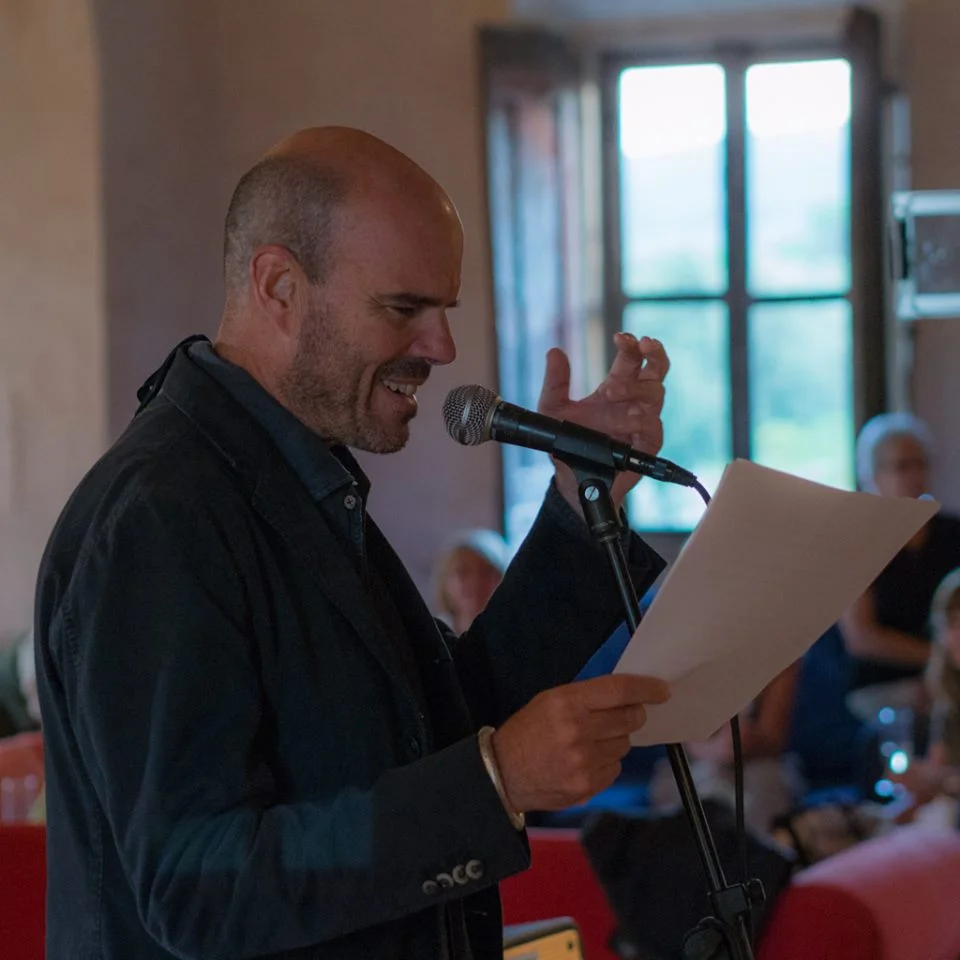
My climbing partner introduced me to a retired former cycling pro who stretches his pension checks by churning out custom bikes from dead-stock components and factory closeout frames.
The old guy’s workshop was in a basement garage, crowded with old men. Fat guys seated, rangy graybeards standing hands-in-pockets, clustered around a strong-looking, almost boyish geezer in a blue labcoat. The place buzzed, everyone blabbing full speed, full volume. The mechanic had a steel-frame Colnago strung up on Man Called Horse-style hooks, like a boar or deer carcass. He was getting the machine roadworthy for the Eroica Classic. Stricken by the scene, I momentarily lost the power of speech. The gears of my mind cranked backwards…to Junior High, where my brain seems to have gotten permanently stuck.
Fat Bob, the school rich kid, got a racing bike for a birthday present. It was the first one I ever saw up-close. Had to wonder what a slob like Fat Bob was supposed to do with a weight-free metal-flake red De Rosa. Except maybe crush it. The machine was made of impossibly thin steel tubes. You could pick it up with two fingers, that was the litmus test for hot bikes. Couldn’t stop looking at the riveted, genuine-leather saddle, those dangerous drop bars and toe-clips. Nobody could. Crazy-ass to ride a racing bike in town, in traffic. But crummy 3-speeds and no-speeds that used to be so much fun never recovered.
Flash-forward, back to the garage in Grassina. “What a beautiful bike,” I said. In other words, the sky is blue, the ocean vast.
The mechanic nodded. Maybe this Yank’s not a complete moron.
A Titanium-frame Cinelli mountain bike on another hook was the mechanic’s personal ride. The carbon-fiber racing frames on a rack were works in progress. Couldn’t help myself. Had to look, heft, fondle, practically sniff.
Giuliano’s underground bike lab was a convivial scene bathed in low-watt yellow glow. No smoke, no booze, no sex-blab. A world I wanted to get back into, even though I’d never really been there in the first place. Men gearing up for something necessary, dangerous, difficult --together. A war, or a 200 km bike race.
He knew he had a customer solidly on the line. He sounded the depths of my pockets, took my phone number.
Silent months followed. I cranked the bike called Frankenstein up hills, hills and more hills, and forgot about racing bikes, drop bars, toe-clips. Frankenstein’s basic hideousness was proof against bike thieves, and I’d gotten to feel that the bike didn’t even matter. I just loved to ride. Winter was coming on strong when I got the call. The guy on the other end didn’t remember my name, or couldn’t pronounce it. He’d forgotten whom the number connected to. Anyway, he had something for me, if I wanted to come take a look. No obligation, of course.
Rode across town on Frankenstein, at dusk. Grassina’s a border-town, a sort of Tijuana before the hardcore Chianti-country. Pleasant homey smell of smoke and leaf mould, farm atmosphere, hunched ancients in tweed zipper-slippers shuffling home from a proletarian aperitivo at the commie Casa del Popolo. Home for wine, spaghetti and open-mouthed denture-sliding TV nod-odysseys.
Giuliano was sweeping up. His ciclismo aficionado entourage had also straggled off for beans, grappa, TV zombification. He washed his hands.
“Oh, so that number was you.”
He opened a door at the back of the garage/lab into what looked like a live-in basement rigged for senior marital discord nights, pulled a bike into the light as if it were a shy fragile creature who didn’t really want to be seen.
My eyes popped. I felt like a booze-breathing gargoyle reluctantly suckered into an arranged marriage scam, but then the matchmaker crone reaches behind a fly-blown curtain and leads out Silvana Mangano.
Seafoam green chrome-molybdenum Cinelli racing frame, a-glitter with Campagnolo components and deadly black-taped drop bars like praying mantis claws. Giuliano introduced her, in extremely ancient cycle parlance, as an iron bike. He pointed out the nearly invisible welds. Nobody ever got them finer.
“You like it? You want it?”
Never wanted anything non-human so much in my life.
But Giuliano wouldn’t take my shakily proffered pelf. ‘Ey, got to take her out on a maiden voyage, first. Make sure the bike suits your gross anatomy before you pay. Buy some bike shoes and padded shorts. And helmets are definitely a good idea.
Took a test ride the next afternoon, on the Grassina hill, up to La Panca and over the Sugame Pass.
“How was it?”
“Felt like flying.”
“That’s what I want to hear.” So he took the money.
Michael Jackson would’ve been happy to prance and shriek in my spanking new black-and-white patent leather Corvaros. The rest of my outfit, aside from battleship-gray padded suspender shorts was Slob-O Supremo. Most aspects of Italian life are a fashion show. I was a mutant in a torn sweater, wool army socks, camo gloves, fungoid German bike helmet, lounge lizard shades. But I was a happy mess.
I rode my new dead-stock racing bike solo on days-off from riding dirt trails with Tarzan and the Warthogs. Had to get used to the road, a light frame, thin tires, toe cleats. Hills and more hills, longer, harder, further, a shade faster. Occasionally I saw Tarzan in full lycra tuxedo, blasting by on his white iron Scapin racer, the locomotive on a five- or six-man wind-train. I’d wave, he’d yell. They heard him in Bologna, across the Apennine range.
Tarzan has built-in biological bionic proxy-odometer. When he figured I’d put in sufficient solo kilometers on my Cinelli, he said, “Suck my wheel. Let’s go.”
Giuliano the Mechanic’s workshop isn’t entirely free of clutter, even discounting the warm-blooded two-legged kind. But it’s orderly clutter. No girlie posters. Instead, framed pictures of a large cycling group, year after year, uniform after garish small-corporate sponsor-logo-encrusted uniform. A few black and white pics from the Golden Age, including one of a startlingly handsome young man who’s just crossed a finish line gloriously alone. No expression of foolish evanescent triumph, no raised arms or open mouth. Instead, a quizzical expression. Can this really be the finish line already? Why do arrival and victory always seem premature, hollow?
The face of a knight who’s slain a fearsome dragon, only to discover the monster was merely a custodian of the true quest’s secret.
Above his work-table are framed mawkish poems about friendship, written by members of the hangout discussion team. Rainy days are lovely too because a man can cry with his head held high and no one has to see his tears. Tributes to a person of great integrity, with skilled hands and an open heart, with cycling metaphors thrown in. Clumsy home-made awards and tributes, diplomas from bicycle component factories.
Giuliano opened his shop over 40 years ago, after an apprenticeship at Cicli Morozzi (where they also sold sewing machines, for some reason), a few blocks away. His partner died not long afterwards, and Giuliano has kept his widow on the payroll ever since. Loyalty extends beyond the grave, way beyond. Signora Maria doesn’t know much about bikes, or particularly care for cyclists or the layabouts who hang out in the workshop, but she can sweep floors and operate a cash register.
Beautiful bike frames from past decades are suspended from a rack over the bathroom in the back like rigid heraldic flags in a cobwebbed castle hall, or skeletons in a Natural History museum.
Tarzan, captain and newly elected President of the Oltrarno, treated himself to a new bike. A man who’s a partial partner in a tiny independent grocery store and the father of two little girls can’t pick up a shiny gadget lightly. The search for Tarzan’s presidential ride lasted months. Vasco, his faux-surly trusted mechanic finally came up with the right machine, a red-black, full-carbon Wilier Triestina, dripping with Campagnolo components and fettuccine-spoke wheels. Captain Tarzan was overjoyed, and supremely proud of this object. He’d fondled, considered, approved every piece, from handlebar bolts to saddle pin. But, in the spirit of menefreghismo, he acted like a hot new second-hand bike was no big deal.
Just me and Tarzan, on the machine’s maiden first-ride test run. He broke away from me almost ridiculously fast at Falciani, stayed way ahead for the whole uphill ride to San Casciano, waited for me to catch up towards the top. “This is just a whole ‘nother way to ride,” he crowed. He was puffed up as a turkey, but the inflation was from happiness, not pride.
Marco the Butcher has his shop on Via Romana, the same street as Tarzan’s grocery. He’d just gotten a new second-hand bike too, an aluminum Specialized, so when he said, “They stole the new bike,” I thought he was talking about his own.
Soon turned out some filthy human cockroach had broken into Tarzan’s garage.
Glimpse of a gleaming red-and-black racer in a darkened medieval-atmo utility cave as the metal shutter clanked down, when the owner’s back was turned. The gate didn’t go down all the way. The locking mechanism hadn’t fully clicked. Some skilled, able-bodied creep spots an easy opportunity, comes back when the coast is clear. An expensive bike, probably fenced for a quick sleazy hundred or two. The crime doesn’t exactly count as murder. Not exactly 100%. Maybe only for a day or two. Soul murder hurts, but eventually heals.
Tarzan got back on his steel Scapin, a spent carcass with an ugly scar-weld just over the crank. He hadn’t been able to toss it away, even though it took up space in the crowded garage. He pedaled hard, but with diminished fury. He was crushed.
“Thieves lead shit lives,” I said. I’d been heisted too, recently. Could’ve bought two Ravens with the lost cash (illegal immigrants, even the white Yankee kind, can’t open bank accounts here), and 1970s Rolexes are expensive to replace, but I didn’t mention the home burglary beef.
“At least we got our health,” Tarzan said. “That’s the only thing that really matters.”
“Fuckin’ A.”
Two slobs, unwilling skinhead and past-it hippy hairball, slow down, stop, slap Soul Brother handshakes, exchange a manly bear-hug and everything’s all right again. Nothing on Earth’s stronger than the gentlemanly brotherhood that brutal sport engenders.
That corny stirring dream-sequence scenario didn’t play out. Instead, the worst thing that could possibly happen, did.
We were headed towards Le Gore’s groaning precipice to dispel more of my downhill demons when a burly bearded Bozo clumbered towards us on a sparkling red-black Wilier Triestina, exactly identical to the booty from the heinous crime. Wiliers are an common sight on these roads, and apparently red/black’s an unusual color combo for the brand. A few hundred meters later, Tarzan pulled a sharp U-turn. I followed. But instead of a full-speed chase to stop and interrogate the guy, Tarzan broke off and turned around again, headed home. Seconds ticked away.
“What could we do about it, anyway?” he said.
He didn’t have the serial numbers. False accusation beefs are a serious matter in litigation-happy bureaucratic-nightmare Italy.
“Hey…nice bike. Where’d you get it from, you fuckin’ sneak? Oh yeah? Sez you. Sez you.”
Check out YouTube clips of cyclists in padded shorts and bike shoes getting into fistfights. Ludicrous.
In the meantime, the guy on the possibly hot red-black Wilier was gone. The road we were on has near-infinite possible turn-offs.
“Man I really wish I hadn’t seen that,” Tarzan said.
We carried out grim errands to all the bike mechanics’ shops, to ask them to be on the alert for a certain make frame, wheels, group, etc. You have to phrase this part right, let them know that you know they don’t operate as fences for stolen bike parts. Everyone I talked to gave funeral-style condolences for a lost bike everyone knew would never be recovered. Trucks full of stolen bikes rumble nor’eastward across borders that no longer exist.
The local sense of humor runs bitter. Florentines seem rude loathsome creeps, until you get to know them better. Then you discover they’re even more cynical, malevolent and possessed by Schadenfreude than humanly or demonically possible. But this outlook on life turns out to be a deep gruesome joke, like everything else that’s wrong with the world. Vaunted Tuscan scenery’s only serene because generation after generation of troglodyte peasants cleared boulders and brambles with their handmade implements and rank sweat.
That bike was too beautiful for a mug like you, anyway.
You’d’ve just wrecked the thing.
You can take away the Captain’s new bike, but he’s still the Captain. Even on his rusted clunker, he blasts past, any time I try to break away. Punish the outriders, establish dominance, but also encourage the lowly to attack, always attack.
The hills above ugly industrial suburb Compiobbi are my personal solo suffering domain. Steep and long, but shady, scenic and practically devoid of internal combustion engines. Good place to pick up talismanic feathers and porcupine quills. Near the top, on a foggy fall afternoon, I turned to head for the water-fountain at Monteloro and nearly crashed into a young rider just off my left shoulder.
“Hey!”
“Oops! Sorry!”
The guy rode quiet as an owl. No clue of him on the way up, and I flatter myself on permanent internal 360-degree awareness. I’d never seen the kid before. He rode a sky-blue Cannondale, and there was something so gorgeous and American about his bike that almost made me homesick. No helmet. No flashy bike clothes. Nice soft voice. Relaxed, smart pace. I was kind of surprised when I caught up with him again after I stopped to fill my water-bottles.
We raced a bit. We were pretty evenly matched. Seemed like I was slightly stronger uphill, so it was fun exchanging the lead. No blab necessary.
Mauled-muffler clangour popped this pedal paradise. A frustrated 1970s Alfa Romeo bombed into view, took a blind curve too wide, way too fast. The driver was blabbing on his cell-phone, probably giving his wife detailed instructions on how he wanted his spaghetti lunch cooked. If we’d been fifty meters ahead, he’d have creamed us both. The driver careened towards us one-handed, skidded back into his lane at the last tire-screeching second. Instead of flipping him off in the rearview mirror, I extended tranquil universal hand-jive for, “Slow down, dude. Hang up and watch the road. Life’s beautiful and there’s room and time for all of us.”
“No use,” the quiet rider said. “Some people won’t slow down even if they kill somebody.”
Hit me what enormous violence is done to the world every time some starts up a car- or motorbike engine.
Incredible arrogance is expressed in the life-philosophy “My hurry and my time are worth more than your life.” Easing off the gas to avoid injuring cyclists increasingly seems an intolerable aggravation, to some people.
Lonely lovely winding hill roads increasingly feature homemade monuments, columns and engraved tombstones, with fake flowers and faded home photographs of healthy young people bumped out of the cycling life by rabid motorists. At this point in time, they outnumber anti-fascist Partisan summary execution-spot monuments.
The silent cyclist let me get ahead on the last uphill stretch before the turn-off for Olmo, but he more than caught up on the sincerely nerve-shattering downside. He caught my eye as he slipped by, no helmet, serene. “See you around,” he said.
But when I swung through the next turn, at 70 km/h, fast as I’ll ever go, he was gone. There was an unimpeded view of the road ahead. No turnoffs anywhere, but the guy on the sky-blue bike was gone. Nobody’s that fast, I thought. Not possible.
Never saw him again.
Matthew Licht

La ricetta di pàpalo: Chili Mexicali
Matthew Licht legge: "La ricetta Pápalo: Chili Mexicali" (avvertenza: non riuscirai ma a fare una tortilla messicana anche semi-decente, figurati un taco come comanda il Signore)
La ricetta Pápalo: Chili Mexicali
(avvertenza: non riuscirai ma a fare una tortilla messicana anche semi-decente, figurati un taco come comanda il Signore)
Fai friggere in padella tanta pancetta e salsiccia per ricavarne il grasso. Se sei coraggioso, aggiungi anche strutto di manzo, che il macellaio di fiducia ti regalerà, o almeno ti farà pagare poco. È un’ingrediente imprescindibile. Al grasso liquido e caldo, aggiungi qualsiasi polvere di peperoncino o chili che possa conferire un piacevole, quasi violento color arancione, e anche scorza di arancia triturata fine. Togliere la salsiccia e la pancetta rosolata bene, anche i croccantini del grasso di manzo, lasciando in padella tutto l’unto possibile. Buttateci un battuto di cipolle, sedano e peperoni di tutti i colori, abbondante in base a quanti della tribù hai invitato a cena. Spezie e roba piccante a volontà. Polvere di chili messicano preconfezionato al supermercato può anche andare bene. Spezie e erbette fresche sono per cuochi azzardati con pretese sciamaniche; per quelli meno ambiziosi vanno bene foglie rinsecchite. Quando il battuto vegetale prende un’aria stanca e sudata, ed è completamente pregno dello squisito grasso arancione, butta tutto in una pentola più grande, tipo da spaghetti, apri le scatole di fagioli borlotti, buttali, girali e falli scaldare bene. Ora è tempo di cocktail... una parola azteca, dopotutto. Tira fuori dal freezer una lattina di birra fredda da congelare il naso di un inuit (non bisogna più dire eschimese), aprila e versa il primo sorso nel lavabo per le anime dei morti. Il prossimo sorso è tutto per te, il resto finisce in pentola. Magari buttaci dentro anche un’altra lattina. E se hai in frigo una bottiglia semi-piena di vino bianco, aggiungi anche quello, vai. Abbassa la fiammella, vai a bere e ballare, tornando ogni tanto a dare un’occhiata nel pentolone. Quando il look ti sembra giusto e il liquame si sarà ristretto parecchio, aggiungi tutta la ciccia grassolenta cotta, spegni il fuoco e fai riposare tutto. Poi distribuisci il rancio, buttando sopra ogni porzione una manciatina di cipolle verdi a rondelline, o cipolla bianca triturata fine col coriandolo fresco o foglie di qualche altro fronzuto profumato, panna acida se sei gringo fino al midollo. Non mangiare troppo.
Testo tratto dall'ebook: "Occhio cuore Satana" di Matthew Licht (stanza 251, 2014)
Matthew Licht (testo e voce)
Baldomero Fernandez e Carlo Zei (immagini)